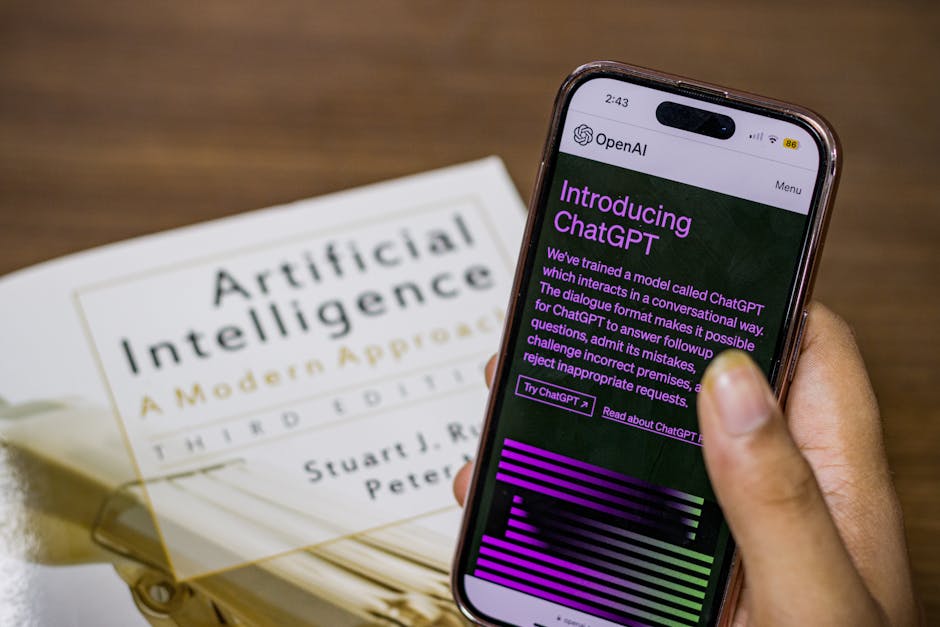
This guide covers everything you need to know about best ai image generators comparison, including practical examples, step-by-step instructions, and actionable tips you can implement today.
Ready to unlock your creative potential and generate stunning visuals without needing to be a design guru? 🎨 In today's visual-first world, AI image generators are no longer a futuristic fantasy – they're powerful, accessible tools transforming how we create content.
This comprehensive guide will walk you through the top 5 AI image generators, helping you understand their unique strengths, best use cases, and how to pick the perfect one for your projects. Whether you're a seasoned professional or just starting your creative journey, you're about to discover your new favorite tool! 🚀
Why AI Image Generators Are Game-Changers 🚀
Remember when creating high-quality images meant hiring a professional, spending hours learning complex software, or sifting through stock photo libraries? Those days are rapidly becoming a distant memory, thanks to artificial intelligence.
AI image generators have burst onto the scene, offering unprecedented levels of creativity, speed, and efficiency. They've democratized visual creation, making it accessible to everyone from hobbyists to marketing teams and professional artists. Here's why they're such a big deal:
- Unleash Creativity: Break through creative blocks by simply describing your vision and watching it come to life.
- Boost Productivity & Automation: Generate multiple variations of an image in minutes, not hours, streamlining your workflow.
- Cost-Effective: Reduce reliance on expensive stock photo subscriptions or bespoke design work.
- Personalization: Create truly unique and custom visuals tailored to your exact needs, impossible with generic stock photos.
- Explore New Styles: Experiment with artistic styles, lighting, and compositions you might never have considered.
These tools are not just for fun; they're serious accelerators for content creation, marketing, game design, art, and so much more. They're a prime example of how AI can enhance human capabilities, not replace them. 💡
How to Choose the Right AI Image Generator for YOU 🎯
With so many options popping up, how do you find the "best" one? The truth is, there's no single best tool for everyone. The ideal choice depends entirely on your specific needs, skill level, and budget. Here are the key factors to consider:
Key Considerations:
-
Ease of Use & Interface:
- Are you a beginner looking for a straightforward, beginner-friendly experience?
- Or are you a power user who doesn't mind a steeper learning curve for more control?
- Look at the user interface (UI) – is it intuitive, or does it feel overwhelming?
-
Output Quality & Style:
- Do you need photorealistic images, or are you aiming for a more artistic, painterly, or abstract style?
- Some generators excel at specific aesthetics. Check out example galleries before committing.
-
Features & Control:
- Do you need advanced features like inpainting (editing parts of an image), outpainting (expanding an image), ControlNet (precise pose/composition control), or image-to-image transformations?
- Can you specify aspect ratios, negative prompts (what *not* to include), or specific styles?
-
Pricing & Free Tiers:
- Many offer a free trial or a credit-based system. How many images can you generate for free?
- What are the subscription models like? Monthly, yearly? Credit bundles?
- Consider the cost per image if you plan heavy usage.
-
Community & Support:
- A vibrant community (e.g., Discord servers, forums) can be invaluable for learning tips, troubleshooting, and getting inspiration.
- Are there good tutorials and documentation available?
-
Use Case Specificity:
- Are you creating images for social media, marketing campaigns, website assets, game development, concept art, or just for fun?
- Some tools integrate better into existing workflows (e.g., Adobe Firefly with Creative Cloud).
Keep these points in mind as we dive into our top 5 picks!
Top 5 AI Image Generators You Need to Try! 💡
Here are our top recommendations, each with its unique strengths. We'll break down what makes them stand out, who they're best for, and provide actionable tips.
1. Midjourney: The Aesthetic Powerhouse
Midjourney has quickly become synonymous with stunning, high-quality, and often breathtakingly artistic AI-generated images. It's known for its incredible ability to interpret complex prompts and produce visually striking results with a distinct artistic flair.
- Key Features:
- Advanced Prompt Interpretation: Excels at understanding nuanced descriptions and translating them into cohesive visuals.
- Versatile Styles: Capable of producing a vast range of aesthetics, from photorealistic to painterly, abstract, and fantastical.
- Aspect Ratio Control: Easy control over image dimensions.
- In-depth Parameters: Offers numerous parameters for fine-tuning style, chaos, stylize, and more.
- Iterative Generation: Simple commands to create variations or upscale images.
- Pros:
- Unmatched Aesthetic Quality: Often produces the most "beautiful" or artistic images.
- Rapid Evolution: Constantly updated with new versions (e.g., V5.2, V6) that push quality boundaries.
- Active Community: A huge, supportive community on Discord shares tips, prompts, and inspiration.
- Cons:
- Discord-Based Interface: Primarily accessed via Discord commands, which can be a hurdle for some beginners.
- Not Truly "Free": Only offers a limited free trial; full functionality requires a paid subscription.
- Less Control for Specifics: While artistic, it can sometimes be challenging to get *exact* control over specific elements compared to tools like Stable Diffusion.
- Best For: Artists, graphic designers, concept artists, marketers, social media managers, and anyone prioritizing artistic quality and unique aesthetics. If you want gorgeous visuals, this is often the go-to.
- Pricing Model: Paid subscription plans, starting at around $10/month after a very limited trial.
- Actionable Tip: Don't be afraid to be descriptive! Experiment with adjectives for mood, lighting, and artistic styles. Use the `—ar` parameter (e.g., `--ar 16:9`) for specific aspect ratios. Join the Midjourney Discord to learn from others!
2. DALL-E 3 (via ChatGPT Plus or Microsoft Designer/Copilot): The Conversational Creative
DALL-E 3, especially when integrated with ChatGPT Plus, represents a significant leap in prompt understanding and image coherence. It's incredibly good at interpreting natural language and generating images that accurately reflect complex descriptions, including text within images.
- Key Features:
- Superior Prompt Understanding: Leverages large language models (LLMs) to understand context and generate highly relevant images.
- Text in Images: Can accurately render text within the generated image, a notoriously difficult task for AI.
- Conversational Generation: When used with ChatGPT, you can refine images through natural conversation, asking for tweaks and additions.
- Built-in Safety Filters: Designed with robust content policies.
- Pros:
- Incredibly Easy for Beginners: Just type what you want in plain English.
- High Coherence: Images tend to accurately match the prompt's intent, even with complex details.
- Integrated Workflow: Seamlessly generate images while brainstorming content in ChatGPT.
- Free Options: Accessible for free via Microsoft Designer and Copilot.
- Cons:
- Less Artistic Control: While good, it offers fewer direct stylistic parameters than Midjourney.
- Resolution Limits: Generated images typically have a fixed resolution, sometimes lower than desired for professional print.
- Access Requirement: Requires a ChatGPT Plus subscription or use of Microsoft's free tools.
- Best For: Content creators, marketers, bloggers, social media managers, educators, and anyone who needs to quickly generate relevant images from complex textual descriptions, especially those who prioritize ease of use and prompt accuracy. Excellent for beginners!
- Pricing Model: Requires a ChatGPT Plus subscription ($20/month) for direct access through ChatGPT. Also available for free via Microsoft Designer and Copilot.
- Actionable Tip: Let ChatGPT refine your prompts! Instead of just giving DALL-E a prompt, tell ChatGPT your overall goal, and ask it to craft several detailed prompts for DALL-E 3. This leverages the LLM's full power.
3. Stable Diffusion (Various Interfaces: Leonardo.ai, Automatic1111, DreamStudio)
Stable Diffusion is an open-source model that has revolutionized the AI image generation space by putting immense power and customization into the hands of users. While the core model is free, various user interfaces and cloud services make it accessible to different skill levels.
- Key Features:
- Open-Source & Customizable: The underlying model is free, allowing for endless modifications, fine-tuning, and local hosting.
- ControlNet: An incredibly powerful feature that allows precise control over composition, pose, depth, and edges using reference images.
- Inpainting & Outpainting: Edit specific parts of an image or intelligently expand its borders.
- Image-to-Image (Img2Img): Transform existing images based on a new prompt.
- Vast Ecosystem: Thousands of community-trained models (checkpoints/LoRAs) for specific styles and subjects.
- Pros:
- Ultimate Control: Offers the most granular control over the generation process.
- Unlimited Possibilities: With custom models and extensions, the creative potential is vast.
- Free to Use: If you have the hardware to run it locally (e.g., via Automatic1111), it's completely free.
- Community Driven: Constant innovation and new tools from a massive global community.
- Cons:
- Steep Learning Curve: Can be overwhelming for beginners, especially advanced features.
- Hardware Demands: Running locally requires a powerful GPU (NVIDIA preferred).
- Quality Variability: Without good prompting and model selection, output quality can be inconsistent.
- Can be Complex: Setting up local environments can be technical.
- Best For: Power users, developers, 3D artists, game developers, researchers, and anyone who wants ultimate control, deep customization, and is willing to invest time in learning. Ideal for specific niche styles or highly controlled outputs.
- Pricing Model: The core model is free and open-source. Cloud services (like DreamStudio, Clipdrop, or platforms like Leonardo.ai) offer credit-based or subscription plans.
- Actionable Tip: If you're new to Stable Diffusion, start with a user-friendly web interface like Leonardo.ai (next on our list!) or DreamStudio before diving into local installations like Automatic1111. Experiment with different "checkpoints" (models) for varied artistic results.
4. Leonardo.ai: Stable Diffusion Made Easy & Artistic
Leonardo.ai is essentially a highly refined and user-friendly platform built on top of Stable Diffusion. It abstracts away much of the complexity, offering an intuitive interface alongside powerful features, making it an excellent bridge for those who want Stable Diffusion's power without the headache.
- Key Features:
- Fine-tuned Models: Curated selection of high-quality, specialized Stable Diffusion models (e.g., for photography, illustration, game assets).
- Canvas Editor: An integrated image editor for inpainting, outpainting, and manipulating generated images.
- AI Image Generation: Standard text-to-image with advanced controls.
- AI Mesh Generation: Generate 3D textures.
- Free Daily Credits: Generous free tier to get started.
- Pros:
- Beginner-Friendly: One of the most accessible ways to experience the power of Stable Diffusion.
- Excellent Output Quality: Often produces stunning images, especially with its specialized models.
- Generous Free Tier: Daily credits allow for significant experimentation.
- Active Community & Resources: Great for learning and inspiration.
- Cons:
- Credit System: While generous, heavy users will hit credit limits and need to subscribe.
- Less Raw Control: While feature-rich, it doesn't offer *every* single parameter available in a raw Stable Diffusion setup like Automatic1111.
- Best For: Beginners and intermediate users who want to leverage Stable Diffusion's capabilities without the technical hurdles. Ideal for concept artists, game developers, digital artists, and anyone needing a reliable, feature-rich platform with a strong free tier.
- Pricing Model: Offers a generous free daily credit allowance. Paid subscription tiers unlock more credits and features.
- Actionable Tip: Explore the "Fine-tuned Models" section. Instead of just using the default, try models specifically designed for "3D Render" or "Anime Style" to get more targeted results. Don't forget their "Canvas Editor" for powerful post-processing.
5. Adobe Firefly: The Creative Cloud Integrator
Adobe Firefly is Adobe's venture into generative AI, deeply integrated into their Creative Cloud ecosystem. Its primary focus is on being commercially safe and seamlessly integrating AI features into existing Adobe products like Photoshop and Illustrator, making it a powerful tool for professionals already using Adobe software.
- Key Features:
- Generative Fill & Expand: Magically add or remove objects and extend images within Photoshop.
- Text to Image: Standard image generation from text prompts.
- Text Effects: Apply unique textures and styles to text.
- Generative Recolor: Easily recolor vector artwork (in Illustrator).
- Commercial Safety: Trained on Adobe Stock content, public domain content, and openly licensed content, aiming for commercial viability.
- Pros:
- Seamless Adobe Integration: Works beautifully with Photoshop, Illustrator, and other Creative Cloud apps.
- Commercially Viable: Designed with copyright and commercial use in mind, giving peace of mind to professionals.
- Familiar UI: Intuitive for those already comfortable with Adobe products.
- Powerful Editing Features: Generative Fill alone is a game-changer for photo manipulation.
- Cons:
- Still Evolving: While powerful, its pure text-to-image generation can sometimes feel less "artistic" or varied compared to Midjourney.
- Subscription Dependent: Best experienced with a Creative Cloud subscription.
- Credit System: Even with CC, you're on a credit system for generative features.
- Best For: Graphic designers, marketing professionals, photographers, and anyone heavily invested in the Adobe Creative Cloud ecosystem. Ideal for enhancing existing workflows and creating commercially safe content.
- Pricing Model: Included with most Adobe Creative Cloud subscriptions with a monthly allocation of "generative credits." A free web version is also available with limited credits.
- Actionable Tip: If you're an Adobe user, dive into Photoshop and try "Generative Fill." Select an area of your image and describe what you want to add or remove – it's incredibly powerful for non-destructive editing and expanding scenes.
Beyond the Top 5: Other Noteworthy Mentions ✨
The AI image generation space is booming! While our top 5 cover a broad range of needs, here are a few other excellent tools you might want to explore:
- Canva's Magic Media: Great for quick, simple generations directly within the popular design tool. Ideal for social media and presentations.
- NightCafe Creator: Offers a variety of AI models (Stable Diffusion, DALL-E 2, etc.) with a focus on community and sharing.
- Playground AI: A powerful, free alternative based on Stable Diffusion, offering a ton of control and daily free images.
- DreamStudio: Stability AI's official web interface for Stable Diffusion, offering direct access to the latest models.
Conclusion: Your Creative Journey Starts Now! ✅
The world of AI image generation is vast, exciting, and constantly evolving. You've now got a solid overview of the top players, each with its unique strengths and ideal users. Remember, the "best" tool isn't a universal truth; it's the one that best fits *your* specific needs, skill level, and creative goals.
Actionable Next Steps:
- Define Your Needs: Before you even open a tool, think about what kind of images you need (realistic, artistic, conceptual?), what your primary use case is (marketing, art, social media?), and your technical comfort level.
- Start with Free Tiers: Almost all of these tools offer a free trial or a generous credit system. Take advantage of them! Experiment with your top 2-3 choices without spending a dime.
- Experiment with Prompts: Don't be afraid to play around. Try simple prompts, then add more detail, emotions, lighting conditions, and artistic styles. The more you experiment, the better you'll get at "speaking" to the AI.
- Join Communities: Dive into Discord servers or online forums for your chosen tool. You'll find a wealth of knowledge, inspiration, and support from fellow creators.
- Keep Learning: This technology is moving fast. Stay curious, watch tutorials, and keep an eye on new features and models.
Go forth and create! Your next stunning visual is just a prompt away. Happy generating! 🎨✨
FAQ Section ❓
Q1: Are AI-generated images truly free to use commercially?
A: It depends heavily on the specific tool and its licensing terms. While many tools allow commercial use, it's crucial to check each platform's terms of service. Adobe Firefly, for instance, emphasizes commercial safety by training on ethically sourced content. For open-source models like Stable Diffusion, the licensing is often permissive, but you're responsible for the content you generate. Always read the fine print!
Q2: Can AI image generators replace human artists?
A: Not at all! AI image generators are powerful *tools* that augment human creativity, not replace it. They can handle repetitive tasks, generate ideas, and produce variations quickly, freeing artists to focus on higher-level conceptualization, refinement, and injecting their unique artistic vision. Think of them as sophisticated paintbrushes or digital assistants, not substitutes for human talent and emotion.
Q3: What makes a "good" prompt?
A: A good prompt is descriptive, specific, and often structured. Instead of "a cat," try "a majestic Siamese cat, sitting regally on a velvet cushion, in a sunlit classical library, oil painting style, hyperrealistic, dramatic lighting." Include subjects, actions, settings, styles, mood, lighting, and even camera angles. Experiment with negative prompts (what you *don't* want) too!
Q4: How important is my computer's power for these tools?
A: For most cloud-based AI image generators (Midjourney, DALL-E 3, Leonardo.ai, Adobe Firefly), your computer's power is largely irrelevant, as the heavy lifting is done on their servers. You just need a stable internet connection. However, if you plan to run open-source models like Stable Diffusion locally (e.g., via Automatic1111), you'll need a powerful GPU (NVIDIA graphics card with ample VRAM is usually recommended) to get decent speeds.
Q5: Which is the best *free* AI image generator for beginners?
A: For beginners looking for a genuinely free experience, Leonardo.ai and DALL-E 3 via Microsoft Designer/Copilot are excellent choices. Leonardo.ai offers a generous daily credit system and a user-friendly interface with powerful features. Microsoft Designer/Copilot gives you access to DALL-E 3's excellent prompt understanding for free. Both are great places to start your AI image generation journey without any cost.
Have you tried any of these AI tools? What's been your experience? Share your thoughts in the comments below - I'd love to hear what's working for you!
Related Topics: #AI #ArtificialIntelligence #AITools #Productivity #Automation #Technology #Tutorial #Guide #TechTips
Comments
Post a Comment