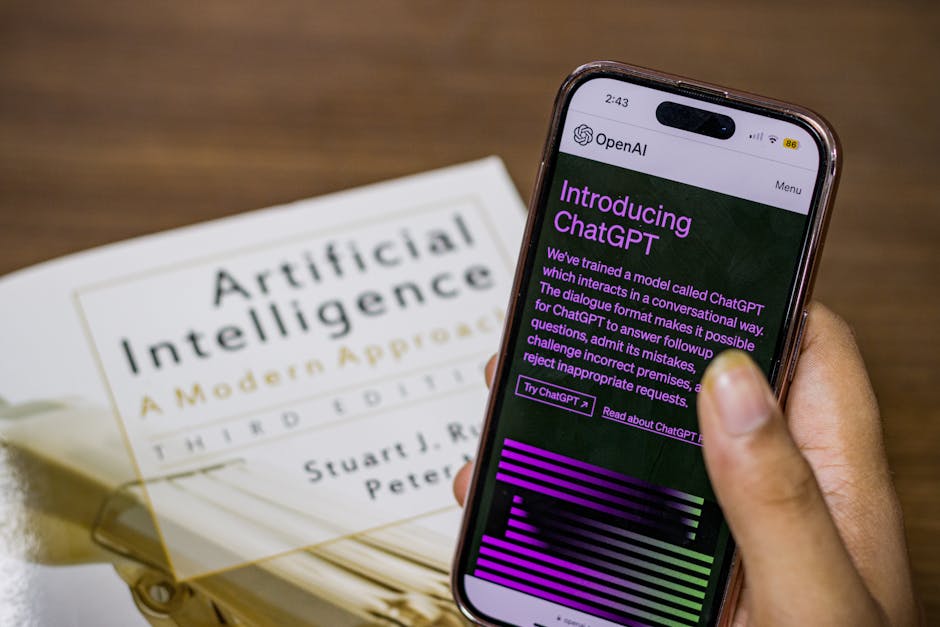
This guide covers everything you need to know about top ai tools for productivity, including practical examples, step-by-step instructions, and actionable tips you can implement today.
Feeling overwhelmed by your to-do list? Wish you had a personal assistant to handle the mundane tasks and free up your time for what truly matters? Good news! Artificial Intelligence (AI) isn't just for sci-fi movies anymore; it's your new secret weapon for skyrocketing productivity.
In this comprehensive guide, we're diving deep into the 10 best AI tools that can transform how you work, learn, and create. You'll discover how to leverage these powerful technologies to automate workflows, generate content, streamline communication, and ultimately achieve ultimate productivity. Let's unlock your full potential together! 🚀
What Are AI Tools and Why Do You Need Them?
Simply put, AI tools are software applications that use artificial intelligence to perform tasks that typically require human intelligence. This can range from understanding natural language and recognizing patterns to making decisions and learning from data. For productivity, they're game-changers because they can:
- Automate Repetitive Tasks: Freeing up your time for strategic work.
- Enhance Creativity: Helping you brainstorm, generate ideas, and overcome creative blocks.
- Improve Efficiency: Speeding up research, writing, and data analysis.
- Reduce Errors: Acting as an extra pair of eyes for proofreading and data validation.
Ready to meet your new digital sidekicks? Let's dive in! 💡
1. ChatGPT / Google Gemini: Your All-Purpose AI Assistant
When it comes to general-purpose AI, large language models (LLMs) like ChatGPT and Google Gemini are at the forefront. They are incredibly versatile and can assist with a myriad of tasks, making them indispensable for almost anyone looking to boost productivity.
Key Features:
- Content Generation: Draft emails, blog posts, social media captions, or even entire articles in seconds.
- Brainstorming: Generate ideas for projects, marketing campaigns, or problem-solving.
- Summarization: Quickly condense long articles, reports, or meeting transcripts.
- Code Generation/Debugging: Assist developers with writing code snippets or finding errors.
- Learning & Research: Ask complex questions and get concise, understandable answers.
Practical Tips & Use Cases:
Use it to kickstart your writing process when facing writer's block. Ask it to "write an outline for a blog post about time management techniques" or "draft a polite email requesting a meeting reschedule." You can even ask it to "explain quantum physics in simple terms for a 10-year-old" to quickly grasp new concepts. ChatGPT has a free tier, making it super beginner-friendly.
2. Notion AI: Integrated Workspace Power-Up
If you already use Notion for notes, project management, or your personal wiki, then Notion AI is a natural extension that deeply integrates AI capabilities right into your workspace. It leverages AI to enhance your existing content and workflows.
Key Features:
- Smart Content Creation: Generate summaries of notes, brainstorm ideas within your pages, or draft content based on existing text.
- Automated Task Management: Create action items from meeting notes or help define project requirements.
- Translation: Translate text directly within your Notion pages.
- Content Refinement: Improve writing, fix grammar, or change the tone of your text.
Practical Tips & Use Cases:
After a meeting, select your notes and ask Notion AI to "summarize these into key action items and assignees." Or, if you have a block of research notes, ask it to "draft an executive summary based on the following." It's incredibly powerful for keeping all your AI-enhanced work in one cohesive environment. Notion offers a free plan with limited AI credits, perfect for getting started.
3. Grammarly: Your Personal Writing Assistant
For anyone who writes – which is pretty much everyone – Grammarly is a non-negotiable productivity tool. It goes far beyond basic spell check, ensuring your communication is clear, concise, and impactful.
Key Features:
- Grammar & Spelling Correction: Catches errors that traditional checkers miss.
- Punctuation & Syntax: Suggests improvements for better readability.
- Clarity & Conciseness: Identifies wordy sentences and suggests simpler alternatives.
- Tone Detection: Helps you ensure your message conveys the right emotion (e.g., confident, friendly, formal).
- Plagiarism Checker: (Premium feature) Ensures originality.
Practical Tips & Use Cases:
Install the browser extension and desktop app. Use it for emails, reports, social media posts, and even casual chats. Before hitting send, always run your text through Grammarly. It's especially useful for non-native English speakers or those who want to polish their professional communication. The free version offers robust grammar and spelling checks, making it super accessible.
4. Otter.ai: Never Miss a Word in Meetings
Meetings are often productivity black holes. Otter.ai helps you reclaim that time by automatically transcribing and summarizing your spoken conversations, whether it's a live meeting or a pre-recorded audio file.
Key Features:
- Real-time Transcription: Captures spoken words during live meetings or uploaded audio.
- Speaker Identification: Differentiates between speakers for clearer transcripts.
- Automated Summaries: Generates key takeaways, action items, and topic overviews.
- Searchable Transcripts: Easily find specific information discussed in past meetings.
- Integrations: Connects with Zoom, Google Meet, Microsoft Teams, and more.
Practical Tips & Use Cases:
Record your virtual meetings with Otter.ai. Instead of frantic note-taking, you can actively participate, knowing a detailed transcript and summary will be available afterward. Use the summaries to quickly follow up on action items or share key decisions with team members who couldn't attend. Otter offers a generous free tier for limited monthly transcription.
5. Zapier: Connect and Automate Everything
Zapier isn't an AI tool in the generative sense, but it leverages AI concepts (like advanced conditional logic and learning from user actions) to create powerful automations between your apps. It's the ultimate connector for your digital workflow.
Key Features:
- App Integrations: Connects thousands of apps (Gmail, Slack, Trello, Salesforce, etc.).
- Workflow Automation ("Zaps"): Create rules that trigger actions in one app based on events in another.
- Conditional Logic: Build complex automations with "if this, then that" scenarios.
- AI-Powered Suggestions: Helps you discover new automation opportunities.
Practical Tips & Use Cases:
Set up a Zap to automatically save email attachments from specific senders to a cloud storage service like Google Drive. Or, create a Zap that posts new tasks from your project management tool to a specific Slack channel. Imagine getting a new lead in your CRM and having Zapier automatically add them to your email marketing list and create a follow-up task in your to-do app. Zapier has a free plan for basic, multi-step Zaps.
6. Midjourney / DALL-E 3: Visual Content Creation Made Easy
In a visually driven world, creating stunning images quickly is a huge productivity booster. Midjourney and DALL-E 3 (integrated with ChatGPT Plus) are leading the charge in text-to-image AI generation, allowing you to bring your ideas to life with simple text prompts.
Key Features:
- Text-to-Image Generation: Create unique images from descriptive text prompts.
- Style Versatility: Generate images in various artistic styles (photorealistic, painterly, cartoon, abstract, etc.).
- Rapid Prototyping: Quickly visualize concepts for designs, presentations, or marketing materials.
- Image Customization: Refine and iterate on generated images with further prompts.
Practical Tips & Use Cases:
Need a header image for your blog post? Describe it to Midjourney or DALL-E 3: "a vibrant image of a person sitting at a desk with futuristic AI interfaces floating around them, in a digital painting style." Use it for social media graphics, presentation slides, mood boards, or even generating unique illustrations for your content. DALL-E 3 is available through ChatGPT Plus (paid); Midjourney offers a trial.
7. Descript: AI-Powered Audio & Video Editing
Editing audio and video can be incredibly time-consuming. Descript revolutionizes this process by allowing you to edit media files like a document. It's a game-changer for podcasters, YouTubers, and anyone working with multimedia.
Key Features:
- Text-Based Editing: Edit audio/video by simply editing the transcribed text. Delete words in the transcript, and they're cut from the audio/video.
- "Overdub" Voice Cloning: Correct mistakes or add new words in your voice without re-recording (with a cloned voice model).
- Automated Filler Word Removal: Automatically removes "ums," "uhs," and other common distractions.
- Multi-Track Editing: Edit multiple audio/video tracks simultaneously.
- Podcast & Video Publishing: Export directly to popular platforms.
Practical Tips & Use Cases:
Record your podcast or video, upload it to Descript, and then simply read through the transcript. If you want to cut a section, just highlight and delete the text. It's incredibly intuitive and drastically reduces editing time, making video and audio creation accessible to everyone. Descript offers a free tier with limited transcription hours.
8. Tome: AI-Powered Presentation Creation
Creating compelling presentations can be a huge time sink. Tome is an AI-powered storytelling tool that helps you generate polished presentations, pitches, and reports with minimal effort, focusing on narrative and visual impact.
Key Features:
- Prompt-to-Presentation: Generate entire presentations from a simple text prompt.
- AI-Generated Layouts & Images: Automatically suggests layouts and can integrate AI-generated images or stock photos.
- Interactive & Responsive: Create dynamic, mobile-friendly presentations.
- Templates & Theming: Offers a variety of professional templates and customization options.
Practical Tips & Use Cases:
Need a presentation for a client pitch? Give Tome a prompt like, "create a presentation about the benefits of AI for small businesses, including 5 key points." It will generate a complete deck with text and visuals that you can then easily refine. This tool is excellent for quickly visualizing ideas and reducing the design overhead of traditional presentation software. Tome offers a free tier with limited credits.
9. Perplexity AI: The Conversational Research Engine
Traditional search engines often leave you sifting through links. Perplexity AI acts more like a research assistant, providing direct, sourced answers to your questions, making information gathering much faster and more efficient.
Key Features:
- Direct Answers with Sources: Provides concise answers to questions, complete with clickable source links.
- Conversational Interface: Ask follow-up questions to delve deeper into a topic.
- Focus Mode: Tailor your search to specific domains like academic, writing, YouTube, or Reddit.
- File Upload & Analysis: Upload documents or PDFs for AI-powered summarization and Q&A.
Practical Tips & Use Cases:
Instead of typing a query into Google and clicking through multiple links, ask Perplexity AI directly: "What are the current trends in sustainable energy technology?" It will provide a summary with sources, saving you valuable research time. It's perfect for students, researchers, or anyone who needs quick, reliable information without the fluff. Perplexity AI has a very robust free version.
10. SaneBox: Your Intelligent Email Manager
Email overload is a massive productivity killer. SaneBox uses AI to intelligently prioritize your inbox, ensuring you only see what's truly important when you need to see it.
Key Features:
- Intelligent Filtering: Automatically sorts emails into relevant folders (e.g., SaneLater for less urgent, SaneNews for newsletters).
- SaneBlackHole: Permanently banish unwanted senders with a single click.
- SaneReminders: Get reminders if someone hasn't replied to your email.
- Attachment Management: Automatically save attachments to your cloud storage.
- Do Not Disturb: Pause email delivery during specific times.
Practical Tips & Use Cases:
Set up SaneBox to manage your inbox overnight. Wake up to a clean inbox with only urgent emails in your main folder. Everything else is neatly categorized and waiting for you when you're ready. This significantly reduces distractions and helps you focus on high-priority communications. SaneBox offers a free trial to experience its features.
Beyond the Tools: Maximizing Your AI Productivity 🎯
Integrate Thoughtfully
Don't just add tools; integrate them into your existing workflows. How can ChatGPT assist with your Notion notes? Can Zapier automate tasks based on Otter.ai summaries? Think about how they can work together to create a seamless system.
Start Small and Experiment
You don't need to master all 10 tools at once. Pick one or two that address your biggest pain points (e.g., writing, meetings, email). Experiment with their free tiers and see how they fit into your daily routine. The key is to start somewhere!
Learn Continuously
AI is evolving rapidly. Stay curious, watch tutorials, and read about new features. The more you understand these tools, the more effectively you can leverage them to your advantage. Many of these tools are beginner-friendly, but deeper dives unlock more power. ✅
Choosing the Right AI Tool for You
With so many options, how do you pick? Consider these points:
- Identify Your Biggest Bottlenecks: Are you spending too much time writing, organizing, researching, or managing email?
- Match Tools to Tasks: Select tools specifically designed to alleviate those bottlenecks.
- Consider Your Budget: Many tools offer free tiers or trials. Start there before committing to a paid plan.
- Read Reviews & Watch Demos: See what others are saying and how the tools actually work.
Conclusion: Embrace the AI Revolution for a More Productive You!
The future of work is here, and it's powered by AI. These 10 tools are just the tip of the iceberg, but they represent some of the most impactful ways you can integrate artificial intelligence into your daily life to boost productivity. From writing and researching to managing your inbox and creating stunning visuals, AI is ready to be your most effective assistant.
Don't get left behind. Choose one tool from this list that excites you, sign up for its free trial, and start experimenting today! Your future, more productive self will thank you. ⚡
FAQ: Your AI Productivity Questions Answered
Q1: Are these AI tools safe to use, especially with sensitive data?
A: Most reputable AI tools, especially those geared towards businesses, employ robust security measures, including encryption and strict data privacy policies. However, it's always wise to read their terms of service and privacy policy. For highly sensitive data, exercise caution and avoid inputting confidential information unless the tool explicitly guarantees enterprise-grade security and compliance (like GDPR or HIPAA, if applicable).
Q2: Do I need to be tech-savvy to use these AI tools?
A: Absolutely not! Many of the tools listed here, like ChatGPT, Grammarly, and Otter.ai, are designed with user-friendliness in mind and are incredibly beginner-friendly. Their interfaces are intuitive, and they often provide helpful tutorials. While some advanced features might require a little learning, the basic functionalities are accessible to everyone.
Q3: Can free AI tools really be effective for productivity?
A: Yes, many free AI tools and free tiers of paid tools offer significant productivity benefits. Grammarly's free version catches crucial errors, ChatGPT's free tier is incredibly powerful for content generation, and Otter.ai provides substantial free transcription minutes. They are excellent starting points to experience the power of AI before considering any paid upgrades.
Q4: Will AI tools replace human jobs?
A: While AI will undoubtedly change the nature of work, the general consensus is that it will augment human capabilities rather than fully replace jobs. AI excels at repetitive, data-heavy tasks, freeing humans to focus on creativity, critical thinking, complex problem-solving, and interpersonal communication. Think of AI as a co-pilot, not a replacement.
Q5: How do I choose the "best" AI tool for my specific needs?
A: The "best" tool depends entirely on your specific pain points. Start by identifying what tasks consume most of your time or cause the most friction. If it's writing, look at Grammarly or ChatGPT. If it's meetings, consider Otter.ai. For automation, Zapier is key. Most tools offer free trials or basic free versions, so experiment to find what truly clicks with your workflow.
Have you tried any of these AI tools? What's been your experience? Share your thoughts in the comments below - I'd love to hear what's working for you!
Related Topics: #AI #ArtificialIntelligence #AITools #Productivity #Automation #Technology #Tutorial #Guide #TechTips
Comments
Post a Comment