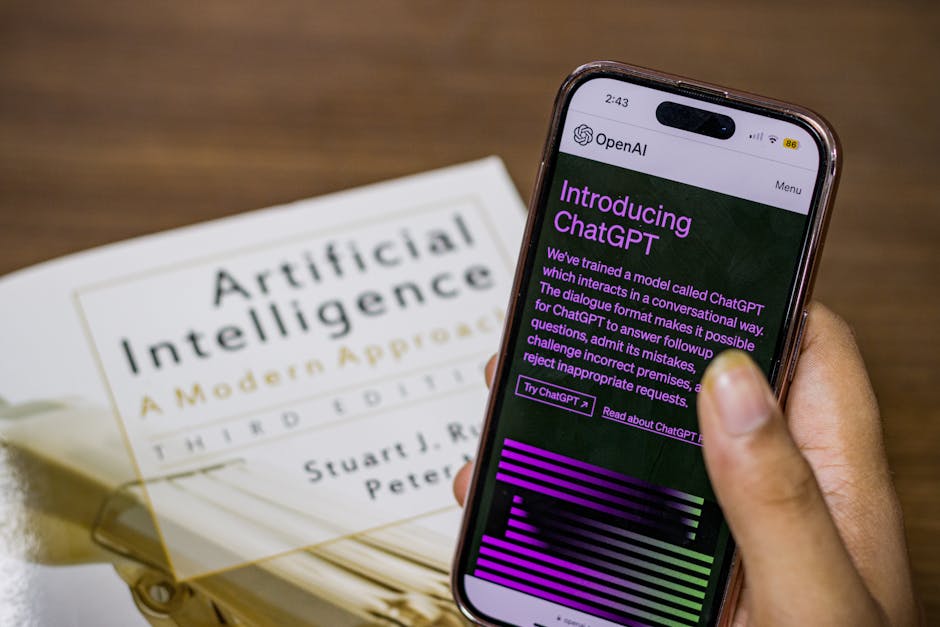
This guide covers everything you need to know about beginner guide to using ai tools, including practical examples, step-by-step instructions, and actionable tips you can implement today.
Are you feeling left behind as the world buzzes about AI? Do terms like "automation" and "productivity" pique your interest, but diving into artificial intelligence tools seems overwhelming?
You're in the right place! This comprehensive guide will cut through the jargon and give you a clear, actionable 3-step path to confidently exploring and integrating AI tools into your daily life. Get ready to boost your efficiency and unlock new possibilities!
Step 1: Demystify & Discover Your First AI Tools 💡
The first hurdle for many beginners is simply understanding what AI tools are and where to find them. Let's break it down.
What Exactly Are AI Tools?
Forget the sci-fi robots taking over the world. In practical terms, AI tools are software applications that use artificial intelligence algorithms to perform tasks that typically require human intelligence. Think of them as incredibly smart assistants designed to help you with everything from writing emails to generating images or analyzing data. They learn from vast amounts of information and can automate repetitive tasks, generate creative content, and even answer complex questions.
The beauty of modern AI is its accessibility. Many powerful tools are now beginner-friendly and even offer free tiers, making it easier than ever to experiment.
Finding Your First AI Tool: Where to Look
The AI landscape is vast, but you don't need to master everything at once. Focus on areas where you want to boost your productivity or creativity. Here are some popular, accessible categories and specific tools to get you started:
- Text & Writing Assistants: These are probably the most common starting point. They can help brainstorm ideas, draft content, summarize documents, or even generate code.
- ChatGPT (OpenAI) / Google Bard / Microsoft Copilot: These are large language models (LLMs) that can answer questions, write various forms of content, brainstorm, and much more. They're excellent general-purpose AI companions and often have free versions.
- GrammarlyGO: Integrates with your writing to not just check grammar but also suggest rephrasing, tone adjustments, and even generate full sentences or paragraphs based on your context.
- Perplexity AI: A conversational search engine that provides answers with sources, making it fantastic for research and quick information gathering.
- Image & Art Generators: Want to create unique visuals without design skills? These tools turn text into stunning images.
- Canva Magic Studio: Canva's suite of AI tools includes "Magic Write" for text, "Magic Design" for presentations, and "Text to Image" for generating visuals directly within their user-friendly design platform.
- DALL-E 3 (integrated into ChatGPT Plus/Copilot) / Midjourney / Stable Diffusion: These are powerful image generation models. DALL-E 3 is particularly easy to use via conversational prompts.
- Organization & Summarization: For busy individuals, these tools can be game-changers.
- Notion AI: Built into the Notion workspace, it can summarize notes, brainstorm ideas, draft content, and even clean up databases.
- Otter.ai: Transcribes meetings in real-time and can generate summaries, action items, and highlights. Perfect for remote work or lectures.
- Automation & Integration: These tools connect different apps and services, creating automated workflows.
- Zapier / IFTTT: While not strictly "AI content generation," these platforms allow you to connect AI tools with your existing apps (e.g., "When I get an email about X, summarize it with AI and send to Slack"). This is where true automation starts.
Your Actionable First Step: Pick just one or two tools from the lists above that resonate most with your immediate needs. Don't try to learn them all at once! I recommend starting with a powerful LLM like ChatGPT, Google Bard, or Microsoft Copilot because their versatility allows you to explore many different applications.
Step 2: Dive In & Experiment Like a Pro 🚀
Now that you've picked your first AI tool, it's time to get your hands dirty. The best way to learn is by doing!
Getting Started: Your First Interaction
Let's assume you've chosen ChatGPT, Google Bard, or Copilot as your starting point. The process is remarkably simple:
- Sign Up/Log In: Most tools require a quick sign-up, often using your Google or Microsoft account. Look for a "Try for Free" or "Get Started" button.
- Find the Chat/Prompt Box: This is usually a prominent text input field at the bottom of the screen.
- Type a Simple Command (Your First "Prompt"): Don't overthink it! Start with something basic.
- Example 1: "Tell me a fun fact about giraffes."
- Example 2: "Give me 3 ideas for a healthy breakfast."
- Example 3: "Explain photosynthesis in simple terms."
- Hit Enter/Send: Watch the AI generate a response almost instantly.
See? You've just had your first conversation with artificial intelligence! The key here is to play around. Ask it follow-up questions, request different formats, or challenge it with new topics.
Exploring Key Features & Hidden Gems
Once you're comfortable with basic interactions, start digging a little deeper into your chosen tool's capabilities.
- ChatGPT/Bard/Copilot:
- Continue the Conversation: These models remember context. You can say, "Now, make those breakfast ideas vegetarian" or "Can you write a short poem about the giraffe fact?"
- Ask for Different Formats: "Turn those breakfast ideas into a bulleted list," or "Can you present the photosynthesis explanation as if I'm a 5-year-old?"
- Plugins/Extensions (ChatGPT Plus): If you upgrade, explore plugins that connect ChatGPT to external services like Wolfram Alpha for calculations, Kayak for travel, or Zapier for workflow automation.
- Custom Instructions (ChatGPT): Set preferences for how ChatGPT should respond to you by default (e.g., "always respond concisely" or "adopt a friendly tone"). This is a huge time-saver!
- Canva Magic Studio:
- Magic Write: In any text box, click the "Magic Write" icon. Give it a prompt like "Write an intro for a blog post about healthy eating" or "Summarize these bullet points."
- Text to Image: Search for "Text to Image" in the Apps section. Describe what you want, and watch it generate unique visuals for your designs. Try descriptive prompts like "A serene minimalist landscape with a single pine tree under a starry night sky, digital art."
- Notion AI:
- Highlight & Summarize: Highlight any text in your Notion page and select "Ask AI" to summarize, explain, or translate it.
- Generate from Scratch: Type
/and then "AI" to see options like "Brainstorm ideas," "Write a blog post," "Translate," or "Summarize."
Practical Tip: Don't be afraid to make mistakes! AI tools are designed to be forgiving. If a response isn't what you wanted, simply refine your request or start a new conversation.
Mastering the Art of Prompt Engineering (The Secret Sauce!)
This sounds fancy, but "prompt engineering" is just a term for learning how to ask AI the right questions to get the best answers. It's the most crucial skill for maximizing your AI productivity.
Here’s how to write effective prompts:
- Be Clear and Specific: Vague prompts lead to vague answers. Tell the AI exactly what you want.
- Bad: "Write something about dogs."
- Good: "Write a 200-word persuasive paragraph about why adopting a rescue dog is beneficial, focusing on companionship and reducing shelter populations."
- Provide Context: Give the AI background information so it understands the situation.
- Bad: "Summarize this." (What is "this"?)
- Good: "I'm writing an email to my boss about a project delay. Please summarize the key challenges from the following meeting notes so I can include them concisely in my email." (Then paste the notes.)
- Specify the Format: Tell the AI how you want the output structured.
- Bad: "Tell me about climate change solutions."
- Good: "List 5 actionable solutions to climate change, presented as a bulleted list with a brief explanation for each."
- Define the Persona/Role: Ask the AI to act as a specific character or expert.
- Bad: "Explain quantum physics."
- Good: "Explain the basics of quantum physics to a high school student, as if you are their enthusiastic science teacher."
- Set Constraints: Give it limitations, like word count, tone, or specific elements to include/exclude.
- Good: "Write a blog post intro (under 100 words) for a tech blog, using a slightly humorous but informative tone, about the benefits of using AI for email management. Include the phrase 'Inbox Zero hero'."
Your Actionable Next Step: Try re-writing some of your earlier simple prompts using these tips. Experiment with adding context, specifying a persona, or asking for a particular format. You'll be amazed at the difference! 🎯
Step 3: Integrate & Optimize for Real-World Impact ✅
You've explored AI tools and learned to prompt effectively. Now it's time to weave them into your daily routines to truly transform your automation and productivity.
Integrating AI into Your Daily Flow
Think about tasks you do regularly that are repetitive, time-consuming, or require a creative spark. These are prime candidates for AI assistance.
- Email Management:
- Use Case: Draft professional emails quickly, summarize long email threads, or generate polite decline messages.
- Tools: ChatGPT/Bard/Copilot, GrammarlyGO (integrates directly with email clients).
- Tip: Give the AI specific bullet points or a few keywords for your email, and let it handle the phrasing and formatting.
- Content Creation (Blogs, Social Media, Reports):
- Use Case: Brainstorm blog post ideas, write outlines, draft sections, generate social media captions, or summarize lengthy reports.
- Tools: ChatGPT/Bard/Copilot, Notion AI, Canva Magic Studio.
- Tip: Use AI for the initial draft, then refine and add your unique human touch. It's a co-pilot, not a replacement!
- Research & Learning:
- Use Case: Quickly grasp new concepts, summarize articles, find specific information, or prepare for presentations.
- Tools: Perplexity AI, ChatGPT/Bard/Copilot.
- Tip: Always cross-reference information from AI with reliable sources, especially for critical facts or complex topics.
- Meeting Notes & Summaries:
- Use Case: Get instant transcriptions and summaries of meetings, highlighting key decisions and action items.
- Tools: Otter.ai, Notion AI (if you take notes in Notion).
- Tip: Integrate these tools with your virtual meeting platforms for seamless capture.
- Basic Coding & Troubleshooting:
- Use Case: Get help writing small code snippets, explaining code, or debugging simple errors.
- Tools: ChatGPT/Bard/Copilot.
- Tip: For complex coding, AI can provide suggestions, but human expertise is still essential for robust development.
For advanced automation, explore tools like Zapier or IFTTT. You can set up "Zaps" like: "When I get an email with 'invoice' in the subject, use ChatGPT to extract key details and add them to a Google Sheet." This moves you beyond basic interaction into truly automated workflows.
Best Practices & Ethical Considerations
As you use AI more, keep these points in mind:
- Always Fact-Check: AI models can sometimes "hallucinate" or generate plausible-sounding but incorrect information. Verify critical data, especially for professional or academic use.
- Privacy & Confidentiality: Do not input sensitive personal, financial, or proprietary company information into public AI tools unless you're absolutely sure of their data policies and security. Be mindful of what you share.
- Bias Awareness: AI models are trained on vast datasets, which can reflect existing biases in society. Be aware that responses might sometimes carry these biases and adjust accordingly.
- Human Oversight is Key: AI is a tool to augment human capabilities, not replace them. Always review, edit, and take ownership of the content or decisions made with AI assistance.
- Cite Your Sources (Where Applicable): If you're using AI-generated content in academic or professional work, consider acknowledging its use, just as you would any other tool.
Stay Curious & Keep Learning
The world of AI is evolving at lightning speed! What's cutting-edge today might be standard tomorrow. To keep your skills sharp:
- Follow AI News: Subscribe to newsletters (e.g., The Rundown AI, AI Breakdowns) or follow reputable tech journalists.
- Join Online Communities: Reddit has thriving AI communities (e.g., r/ChatGPT, r/singularity), and many AI tools have dedicated Discord servers.
- Experiment Continuously: Try new tools, push the boundaries of prompts, and explore different use cases.
Your Actionable Next Step: Identify one repetitive task in your week and actively try to use an AI tool to streamline or complete it. Then, commit to spending 15 minutes each week exploring a new AI feature or trying a new prompt technique. This consistent effort will build your confidence and expertise! ⚡
Conclusion: Your AI Journey Has Just Begun!
Congratulations! You've just completed your 3-step beginner guide to unlocking AI tools. You've gone from demystifying the concept to confidently experimenting and understanding how to integrate AI into your daily life for enhanced productivity and automation. Remember, the goal isn't to become an AI expert overnight, but to embrace it as a powerful co-pilot.
The future of work and creativity is intertwined with artificial intelligence. By taking these actionable steps, you're not just keeping up; you're getting ahead. So go forth, experiment, and enjoy the incredible benefits that beginner-friendly AI tools can bring to your world. Your journey to becoming an Inbox Zero hero, a content wizard, or an efficiency master starts now!
FAQ: Your Common AI Questions Answered
Q1: Are all these AI tools free to use?
A1: Many popular AI tools, like ChatGPT, Google Bard, and Microsoft Copilot, offer robust free tiers that are excellent for beginners and casual users. Others, like Canva Magic Studio or GrammarlyGO, offer free versions with limited features, and premium subscriptions unlock their full capabilities. It's best to start with the free versions and only consider upgrading if you find yourself hitting limitations for tasks you perform regularly.
Q2: Do I need coding skills to use AI tools?
A2: Absolutely not! The beauty of most modern AI tools, especially those listed in this guide, is their user-friendly, no-code interfaces. You interact with them using natural language (text prompts), much like you would talk to a person. Your key skill will be "prompt engineering," which is simply learning how to ask clear and specific questions.
Q3: How reliable is the information generated by AI?
A3: AI models are incredibly powerful, but they are not infallible. They can sometimes generate incorrect or "hallucinated" information that sounds convincing but isn't true. For this reason, it's crucial to always fact-check any critical information, data, or content generated by AI, especially if it's for professional, academic, or sensitive purposes. Treat AI as a highly intelligent assistant, not an ultimate authority.
Q4: Can AI tools replace human jobs?
A4: This is a common concern. While AI tools can automate repetitive and predictable tasks, they are currently designed to augment human capabilities rather than fully replace them. They can free up your time from mundane chores, allowing you to focus on more complex, creative, strategic, and empathetic work – areas where human intelligence still excels. Think of AI as a co-pilot that makes you more efficient and effective, not a replacement for the pilot.
Q5: Is my data safe when I use AI tools?
A5: Data privacy and security are critical considerations. Always review the privacy policy of any AI tool you use. Generally, public AI tools like ChatGPT may use your conversations to train their models, so it's best to avoid inputting highly sensitive, personal, or confidential company information. For business use, many companies offer enterprise-level AI solutions with stricter data governance and privacy agreements.
Have you tried any of these AI tools? What's been your experience? Share your thoughts in the comments below - I'd love to hear what's working for you!
Related Topics: #AI #ArtificialIntelligence #AITools #Productivity #Automation #Technology #Tutorial #Guide #TechTips
Comments
Post a Comment