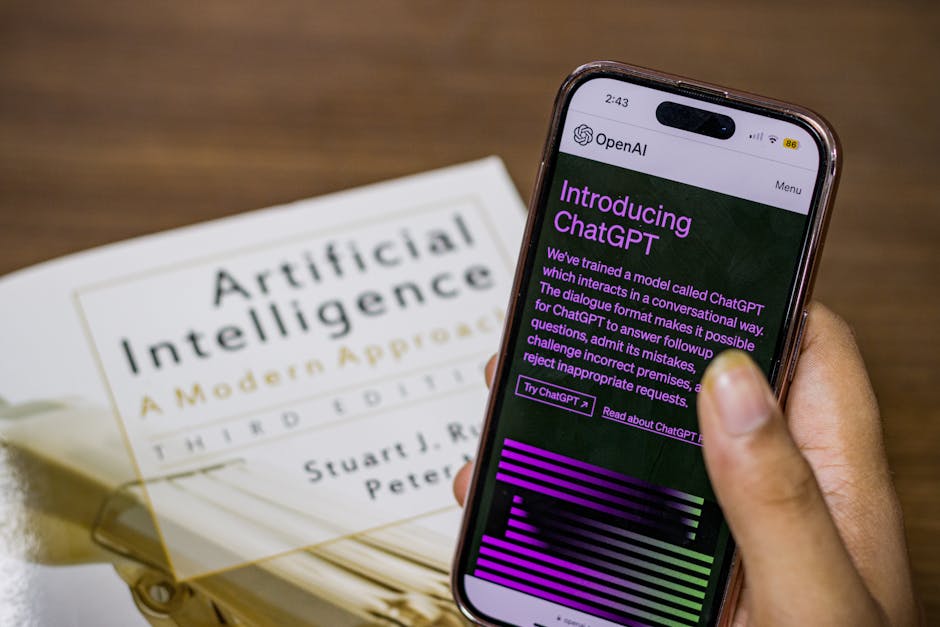
This guide covers everything you need to know about beginner guide to using ai tools, including practical examples, step-by-step instructions, and actionable tips you can implement today.
Feeling overwhelmed by the buzz around AI? You’re not alone! But what if I told you that harnessing the power of artificial intelligence doesn't require a computer science degree? It’s true!
This comprehensive guide will walk you through 5 easy, practical steps to start using AI tools today, boosting your productivity and creativity, even if you’re a complete beginner. Get ready to transform the way you work and learn! 🚀
Step 1: Understand the "Why" and "What" of AI Tools
Before we dive into specific tools, let's get a clear picture of why AI is becoming indispensable and what types of tools are out there. Understanding this foundation will help you choose the right tools for your needs.
Why Should You Care About AI Tools?
Think of AI tools as your new super-powered assistants. They can handle mundane tasks, spark new ideas, and process information at speeds humanly impossible. For beginners, this means:
- Boosting Productivity: Automate repetitive tasks like writing emails, summarizing documents, or generating ideas.
- Unlocking Creativity: Generate images, brainstorm content, or even compose music with AI as your muse.
- Saving Time & Effort: Get answers faster, draft content quicker, and learn new subjects more efficiently.
- Staying Relevant: AI isn't just a trend; it's a fundamental shift in how we interact with technology. Learning to use it is a valuable skill for the future.
In short, AI tools are about making your life easier and more efficient, freeing you up for more complex, creative, or enjoyable work. 💡
What Kind of AI Tools Are Out There?
The world of AI is vast, but for beginners, we can simplify it into a few core categories based on what they *do*:
- Text Generation (Large Language Models - LLMs): These are probably what you think of when you hear "AI." They can write, summarize, translate, answer questions, brainstorm, and more.
- Examples: ChatGPT, Google Gemini, Microsoft Copilot, Claude.
- Image Generation: Turn text descriptions into stunning images, illustrations, or even modify existing photos.
- Examples: Midjourney, DALL-E 3 (integrated into ChatGPT Plus), Stable Diffusion, Canva Magic Studio.
- Audio & Voice AI: Convert text to speech, clone voices, or transcribe audio.
- Examples: ElevenLabs, Descript, Speechify.
- Code Generation/Assistance: Help developers write code, debug, or understand programming languages.
- Examples: GitHub Copilot, ChatGPT for coding.
- Data Analysis & Automation: Process large datasets, find patterns, or automate workflows.
- Examples: Tableau (with AI features), Zapier (for connecting AI tools).
For your first steps, we'll focus heavily on text and basic image generation tools, as they are the most accessible and immediately useful for beginners.
Step 2: Choose Your First AI Tool (Focus on Free & Easy)
Don't get overwhelmed by the sheer number of tools! The best way to start is to pick one, preferably free and easy to use, and get comfortable with it. Think of it as dipping your toe in the water.
Identify Your Need
Before picking a tool, ask yourself: "What's one small task or challenge I want AI to help me with today?"
- Do you need help writing an email?
- Brainstorming ideas for a project?
- Summarizing a long article?
- Creating a simple image for social media?
Having a specific use case will make your first experience more productive and less daunting. 🎯
Top Beginner-Friendly Free AI Tools
Here are my top recommendations for beginners, focusing on ease of use and immediate utility:
-
ChatGPT (Free Version):
The undisputed king for text generation. It’s incredibly versatile and excellent for brainstorming, drafting, summarizing, and answering questions.
- Key Features: Conversational AI, text generation, summarization, translation, code explanation.
- How to Access: Go to chat.openai.com and sign up for a free account.
- Example Use Case: Brainstorming Blog Ideas.
Your Goal: You need 5 catchy blog post titles about "healthy meal prep for busy parents."
What to do: Type your request directly into the chat box. For example: "Act as a content creator. I need 5 engaging blog post titles about healthy meal prep for busy parents. Make them appealing and include a number or a question."
Why it's great: It gives you immediate, creative output that you can build upon. It’s like having a co-writer 24/7. 💡
-
Google Gemini (Free Version):
Google's answer to ChatGPT, integrated with Google's ecosystem. It's often great for more factual queries and can interact with your Google apps.
- Key Features: Text generation, summarization, can access real-time information via Google Search, image input capabilities.
- How to Access: Go to gemini.google.com and log in with your Google account.
- Example Use Case: Summarizing an Article.
Your Goal: You have a long news article you need to understand quickly.
What to do: Paste the URL of the article into Gemini and ask: "Summarize this article in 3 bullet points, highlighting the main takeaways."
Why it's great: It saves you valuable reading time and distills complex information into digestible points. ✅
-
Canva Magic Studio (Free/Freemium):
If you need simple design help or quick images, Canva's AI features are a game-changer, even on the free plan.
- Key Features: Magic Write (text generation for design), Magic Media (text-to-image), Magic Edit (AI photo editing).
- How to Access: Sign up for a free account at canva.com. Magic Studio features are usually found within design projects.
- Example Use Case: Creating a Social Media Graphic.
Your Goal: You need a quick, eye-catching image for an Instagram post about "weekend relaxation."
What to do: Start a new design in Canva, go to "Apps" -> "Magic Media." Type your prompt, e.g., "A cozy living room with a person reading a book, warm lighting, soft colors, digital art style." Canva will generate several options for you.
Why it's great: No design skills needed! You can generate unique visuals in seconds, perfect for presentations, social media, or personal projects. 🎨
-
Microsoft Copilot (Free):
If you use Windows or Microsoft Edge, Copilot is built right in. It combines the power of OpenAI's models (like ChatGPT) with web search, making it a powerful assistant for many tasks.
- Key Features: Text generation, web search integration, image creation (via DALL-E 3), can interact with open web pages in Edge.
- How to Access: It's available in Windows 10/11 taskbar or via copilot.microsoft.com.
- Example Use Case: Drafting an Email.
Your Goal: Write a professional email to your boss requesting a day off next month.
What to do: Open Copilot and type: "Draft a polite email to my manager, [Manager's Name], requesting to take August 15th off for a personal appointment. Assure them I will complete all urgent tasks before then."
Why it's great: Saves time on drafting, ensures professional tone, and you can refine it instantly. ✉️
Action Step: Choose ONE of these tools, sign up, and get ready for Step 3!
Step 3: Dive In and Experiment (No Fear!)
The biggest hurdle for beginners is often fear of "doing it wrong." The truth is, there's no wrong way to experiment with AI! Just jump in and start typing.
The "Prompt Engineering Lite" Approach
The key to getting useful results from AI is something called "prompt engineering" – essentially, learning how to talk to the AI effectively. For beginners, let's call it "Prompt Engineering Lite."
Here are some tips for crafting good prompts:
- Be Clear and Specific: Vague prompts lead to vague answers. Tell the AI exactly what you want.
- Provide Context: Who are you? Who is the audience? What's the purpose?
- Specify the Format: Do you want a list, a paragraph, a table, a poem, an email?
- Set the Tone: Professional, casual, humorous, academic?
- Give Constraints: "Under 100 words," "3 bullet points," "include keywords X, Y, Z."
Practical Prompt Examples:
-
For ChatGPT/Gemini (Text):
- Bad Prompt: "Write something about dogs." (Too vague)
- Better Prompt: "Act as a veterinary expert. Write a short, informative paragraph (under 100 words) for a blog post about the top 3 benefits of adopting a senior dog. Use a compassionate and encouraging tone."
-
For Canva Magic Media (Image):
- Bad Prompt: "A cat." (Too vague, could be anything)
- Better Prompt: "A fluffy orange tabby cat napping peacefully on a sunny windowsill, with a cup of coffee and a book nearby. Watercolor painting style, soft, warm colors, cozy atmosphere."
Think of it like giving instructions to a very intelligent, but literal, intern. The more precise you are, the better the output.
Iterate and Refine
Don't expect perfection on the first try! AI is a conversational tool. If you don't like the output, don't just give up. Give it feedback!
- "Can you make that longer?"
- "Make it sound more professional."
- "Change point number two to focus on X."
- "Generate 3 more options with a different tone."
- "I like the first image, but can you make the cat look more playful?"
The more you interact, the better the AI understands your preferences. This iterative process is where the real magic happens and where you truly learn how to leverage these tools. ⚡
Step 4: Integrate AI into Your Daily Routine
Once you’re comfortable with a tool, it’s time to start weaving AI into your daily tasks. This is where you’ll see significant gains in productivity and creativity.
Boost Productivity at Work/School
- Email Drafting: Instead of staring at a blank screen, ask Copilot or ChatGPT to draft a professional email. You can then quickly customize it.
- Meeting Summaries: Paste meeting notes into Gemini or ChatGPT and ask for a summary with action items.
- Report Outlines: Need to write a report? Ask the AI to generate an outline with key sections and sub-points.
- Brainstorming Sessions: Stuck on a project idea? Ask AI for creative solutions, marketing angles, or project names.
- Learning & Research: Use AI as a super-fast search engine and explainer. "Explain [complex topic] in simple terms for a beginner."
- Coding Assistance (for beginners): If you're learning to code, ask AI to explain code snippets, suggest functions, or even help you debug simple errors.
Enhance Creativity and Learning
- Content Creation: Generate blog post drafts, social media captions, video scripts, or even short stories.
- Image Generation: Create unique visuals for presentations, personal projects, or social media without needing design software.
- Language Learning: Practice conversational skills by chatting with AI in a foreign language.
- Song Lyrics/Poetry: Experiment with generating creative text for artistic endeavors.
Automate Tedious Tasks
While full automation might be a bit advanced for step one, you can certainly automate *parts* of tedious tasks:
- Content Repurposing: Turn a long blog post into 10 social media updates, 5 email subject lines, and a short video script summary.
- Data Entry (with caution): For very structured data, AI can sometimes help extract or categorize information, but always double-check for accuracy.
Start small. Pick one or two tasks you do regularly and see how AI can help. Even saving 5-10 minutes a day adds up! ⚡
Step 5: Stay Curious, Learn, and Explore More Advanced Tools
You've taken your first steps, integrated AI into your routine, and now you're ready to look ahead. The world of AI is constantly evolving, so continuous learning is key.
Beyond the Basics: What's Next?
Once you're comfortable with the beginner tools, you might want to explore more specialized or powerful options:
- Midjourney: For incredibly detailed and artistic image generation. It has a steeper learning curve but delivers stunning results.
- ElevenLabs: For advanced text-to-speech, voice cloning, and realistic narration.
- Claude: Another powerful LLM, often praised for its longer context windows and ability to handle extensive documents.
- Specialized AI Writers: Tools like Copy.ai or Jasper are built specifically for marketing copy, sales emails, and blog posts, offering more templates and features.
- No-Code AI Platforms: Platforms that allow you to build simple AI workflows without coding, connecting different AI services.
Don't feel pressured to jump into these right away. Take your time, focus on mastering the basics, and explore when you feel ready.
Ethical Considerations and Best Practices
As you become more proficient with AI, it's crucial to be a responsible user:
- Fact-Check Everything: AI can "hallucinate" or provide inaccurate information. Always verify critical facts, especially for academic or professional use.
- Be Aware of Bias: AI models are trained on vast datasets, which can sometimes reflect societal biases. Be critical of the output and ensure it aligns with your values.
- Protect Privacy: Don't input sensitive personal or confidential information into public AI tools.
- Acknowledge AI's Role: Be transparent if AI helped create content, especially in academic or professional settings.
- Use as an Assistant, Not a Replacement: AI is a powerful tool to augment human intelligence, not to replace it. Your critical thinking, creativity, and judgment remain invaluable.
By keeping these ethical guidelines in mind, you can harness the power of AI responsibly and effectively. 🤝
Conclusion: Your AI Journey Starts Now!
Congratulations! You've just learned the 5 easy steps to begin your journey with AI tools. From understanding the "why" and "what" to choosing your first tool, experimenting with prompts, integrating AI into your daily life, and thinking about the future, you're well on your way to becoming an AI power user.
The most important thing now is to start DOING. Don't just read this post; open one of the tools mentioned, and try out a prompt. Experiment, play, and discover how AI can make your life easier and more exciting. The future is here, and you're now equipped to be a part of it! Happy prompting! 🚀
FAQ: Your Common Questions Answered
Q1: Are these AI tools truly free, or will I eventually have to pay?
A: Most of the beginner-friendly tools mentioned (ChatGPT, Google Gemini, Microsoft Copilot, Canva's basic Magic Studio features) offer robust free tiers. This means you can use them extensively without paying. However, they often have premium versions that offer more features, faster responses, higher usage limits, or access to more advanced models (e.g., ChatGPT Plus). You can absolutely get started and be very productive with the free versions!
Q2: How accurate is the information provided by AI tools? Can I trust them?
A: AI tools are incredibly powerful, but they are not infallible. They can sometimes "hallucinate," meaning they generate convincing-sounding but factually incorrect information. Therefore, it's crucial to fact-check any critical information or data provided by AI, especially for academic, professional, or medical purposes. Think of AI as a brilliant assistant who sometimes gets things wrong – always verify its work!
Q3: Is it difficult to learn how to use these AI tools? I'm not tech-savvy.
A: Not at all! This is precisely why we focused on beginner-friendly tools. Tools like ChatGPT and Gemini are designed to be conversational – you type your request in plain language, just like you would to a friend. Canva's AI features are integrated into a user-friendly design platform. The biggest "skill" is learning how to ask clear questions (prompting), which is something you'll get better at with practice. You absolutely do not need to be tech-savvy to start using them!
Q4: Can AI tools replace human jobs? Should I be worried?
A: This is a common and understandable concern. While AI will undoubtedly change many job roles, it's more likely to augment human capabilities rather than fully replace them, especially in the near term. AI excels at repetitive, data-heavy tasks, freeing humans to focus on creativity, critical thinking, emotional intelligence, and complex problem-solving – areas where humans still have the edge. Learning to use AI tools makes you more valuable, allowing you to work more efficiently and take on new challenges.
Q5: What are the best practices for keeping my data private when using AI tools?
A: This is very important. Never input highly sensitive personal, confidential, or proprietary information into public AI tools. While providers like OpenAI and Google have data privacy policies, it's best to assume that anything you input could potentially be used for training purposes (unless you explicitly opt-out in settings, if available). For sensitive company data, explore enterprise-level AI solutions or ensure your organization has clear guidelines for AI use.
Have you tried any of these AI tools? What's been your experience? Share your thoughts in the comments below - I'd love to hear what's working for you!
Related Topics: #AI #ArtificialIntelligence #AITools #Productivity #Automation #Technology #Tutorial #Guide #TechTips
Comments
Post a Comment