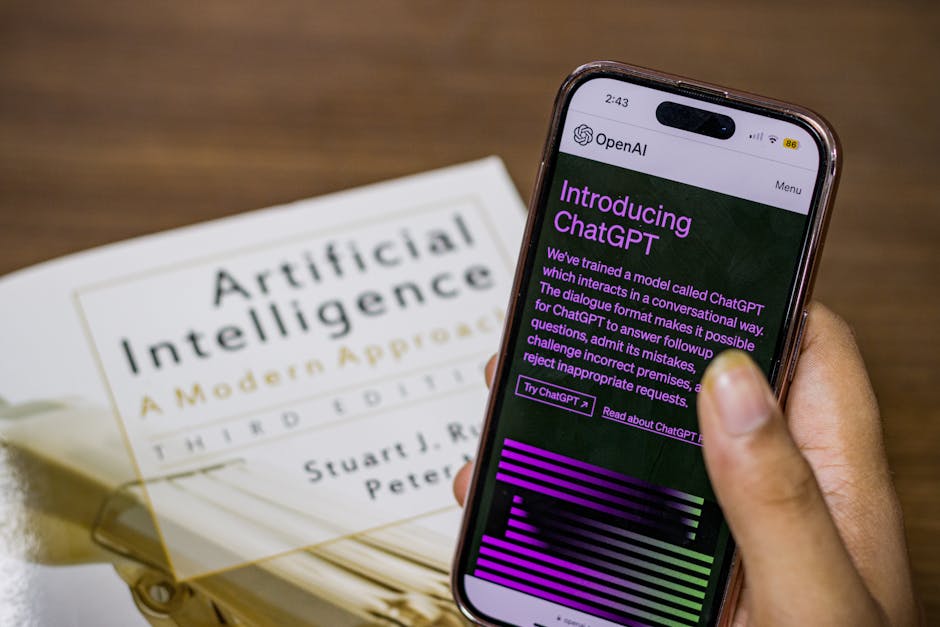
This guide covers everything you need to know about how to use ai for writing blog posts, including practical examples, step-by-step instructions, and actionable tips you can implement today.
Ever feel like you're shouting into the void with your blog posts? You pour your heart and soul into content, but it just doesn't seem to gain traction and go viral. What if I told you there's a powerful co-pilot ready to help you craft posts that not only resonate but *explode* across the internet? 🚀
Welcome to the era of AI-powered content creation, where artificial intelligence isn't just a buzzword, but a game-changer for digital marketers and bloggers. In this comprehensive guide, we're diving deep into 7 practical AI hacks designed to supercharge your blog writing, boost your productivity, and significantly increase your chances of publishing viral posts. Get ready to transform your content strategy!
Hack 1: Hyper-Targeted Topic Discovery & Keyword Research 💡
Creating viral content starts with knowing exactly what your audience wants to read – and what they're *not* finding elsewhere. Generic topics get lost in the noise. AI tools excel at sifting through vast amounts of data to uncover hidden gems and trending gaps that human researchers might miss. This is where your journey to virality truly begins.
Finding Trending Gaps & Untapped Niches
Instead of guessing, let AI pinpoint exactly what's buzzing. You want to identify topics that are trending, yet not saturated with content from competitors. This allows you to carve out a unique space and offer fresh perspectives.
- ChatGPT & Bard for Trend Analysis: Ask these AI assistants to analyze recent discussions on platforms like Reddit, Twitter (X), or specific industry forums. Prompt them with queries like: "What are the most talked-about challenges for [your niche] in the last 6 months?" or "Identify emerging trends and unanswered questions related to [topic X] on social media." They can summarize key pain points, interests, and questions that are ripe for content.
- Google Trends for Real-time Buzz: While not an AI in the generative sense, Google Trends is invaluable. Pair it with AI. Use ChatGPT to brainstorm initial topic ideas, then plug those into Google Trends to see their search volume trajectory. Are they rising? Peaking? Declining? AI can help you interpret this data and suggest related, upward-trending terms.
- SEMrush/Ahrefs for Keyword Gaps: These powerful SEO tools use AI-driven algorithms to analyze competitor websites and find keywords they rank for that you don't. While paid, many offer free trials or limited free versions. Ask ChatGPT to help you interpret the reports: "Based on this SEMrush keyword gap analysis, which 3 topics offer the best potential for high traffic and low competition?" Focus on long-tail keywords identified by these tools, as they often indicate specific user intent and are easier to rank for.
Your Actionable Step: Dedicate 30 minutes to exploring trends with ChatGPT and Google Trends. Pick one or two high-potential topics where there's clear audience interest but not overwhelming competition. This strategic start prevents wasted effort on content nobody is searching for.
Hack 2: Crafting Irresistible Headlines & Hooks 🎯
A viral post lives or dies by its headline and opening paragraph. You could have the most insightful content in the world, but if your headline doesn't grab attention, it won't get clicked. AI tools are masters at generating variations, playing with emotional triggers, and optimizing for clarity and curiosity.
The Power of the First Impression
Your headline is the gatekeeper. Your hook is the welcoming committee. Both need to be incredibly compelling to entice readers to stay.
- Copy.ai & Jasper for Headline Generation: These dedicated AI writing tools have specific templates for headlines. Input your topic and target audience, and they can generate dozens of options in seconds, leveraging frameworks like curiosity, urgency, benefit-driven, or list-based headlines. For example, if your topic is "AI in marketing," they might suggest: "Unlock 5X ROI: How AI Is Revolutionizing Digital Marketing" or "Is AI The Secret Weapon Your Marketing Strategy Needs?"
- ChatGPT for A/B Test Variations: Once you have a few strong contenders, ask ChatGPT to generate 5-10 variations of each, focusing on different emotional appeals (e.g., fear of missing out, aspiration, solving a pain point). You can even ask it to write meta descriptions for each headline, ensuring consistency.
- The "Pattern Interrupt" Hook: Use AI to brainstorm opening lines that break the mold. Instead of a generic intro, ask ChatGPT to start with a surprising statistic, a bold question, or a mini-story that immediately pulls the reader in. Prompt: "Write 3 different blog post hooks for a post about [topic], one starting with a shocking statistic, one with a relatable problem, and one with a provocative question."
Your Actionable Step: After settling on a topic, use an AI tool like Copy.ai (free tier available) or ChatGPT to generate at least 15-20 headlines. Select your top 3 and then refine your chosen headline further with ChatGPT, asking it to optimize for clickability and SEO keywords. Then, have AI draft 3 different hooks for your chosen headline, picking the most engaging one.
Hack 3: Structure for Readability & Engagement ✅
Even the best content can fall flat if it's a wall of text. Viral posts are inherently shareable and easy to digest. AI can help you outline your content, ensuring a logical flow, clear headings, and diverse content formats that keep readers hooked from start to finish.
The Viral Blueprint: Making Content Scannable
Readers today skim before they read. A well-structured post with clear signposts makes your content more inviting and prevents bounce rates.
- AI Outline Generators (Jasper, Surfer SEO): These tools can take your headline and a brief description, then generate a comprehensive outline with `
` and `
` headings. They often analyze top-ranking content for your target keywords to suggest common subtopics, ensuring your post covers essential points.
- ChatGPT for Subheadings & Transitions: Once you have a basic outline, feed it to ChatGPT. Ask it to "flesh out this outline with engaging subheadings for each section" or "suggest smooth transitions between these points." You can also ask it to suggest places to insert bullet points, numbered lists, or even a short anecdote.
- Injecting Interactive Elements: AI can brainstorm ideas for quizzes, polls, or calls-to-action within your content to boost engagement. Prompt ChatGPT: "For a section on [topic], suggest 3 ideas for a quick reader poll or a thought-provoking question to ask in the comments."
Your Actionable Step: Use ChatGPT or an outline generator to create a detailed outline for your post. Ensure each section has clear `
` subheadings. Review it to make sure it flows logically and breaks down complex ideas into manageable chunks. A strong structure is the backbone of a viral post.
Hack 4: Infusing Originality & Human Touch (AI-Assisted) ✍️
The biggest criticism of AI-generated content is its potential for sounding generic or robotic. To go viral, your content needs personality, unique insights, and a genuine human voice. AI can be a fantastic assistant, but it's not a replacement for *your* unique perspective.
Beyond Generic AI Output: Your Secret Sauce
Think of AI as your super-powered research assistant and first-draft generator. The magic happens when you infuse your own brand, experiences, and opinions.
- AI as a Research Catalyst: Use AI to quickly gather facts, statistics, and different viewpoints on your topic. For example, ask ChatGPT: "Summarize the main arguments for and against [controversial topic X]" or "List 5 lesser-known statistics about [industry Y]." This saves you hours and gives you a solid foundation to build upon.
- Personal Anecdotes & Storytelling: After AI generates a section, review it. Where can you add a personal story, a real-world example from your experience, or a client success story? Even if AI can't *invent* your story, it can help you phrase it better. Prompt: "I want to tell a story about [brief outline of your experience]. Help me structure it engagingly for this blog post section."
- Injecting Your Voice & Tone: Train your AI! Provide it with samples of your previous writing and ask it to adapt its output to match your tone. Prompt: "Rewrite this paragraph in a more [humorous/authoritative/empathetic] tone, similar to the style of [your previous article]." This helps maintain consistency and authenticity.
- Fact-Checking & Deep Dives: While AI can generate information, it can also hallucinate. Always fact-check any statistics, claims, or data points AI provides. Use AI to *find* the information, but verify it yourself.
Your Actionable Step: Use AI to generate a first draft for a section of your post. Then, put on your editor's hat. Review it sentence by sentence. Where can you add a personal touch? A unique perspective? A stronger, more authentic voice? Your distinct voice is what truly makes content connect and resonate.
Hack 5: SEO Optimization That Actually Works 🚀
Viral posts aren't just about social shares; they also get discovered through search engines. AI tools can help you optimize your content for SEO in ways that feel natural, not keyword-stuffed. This ensures your content is findable long after the initial buzz fades.
Ranking for Reach: Beyond Basic Keywords
Effective SEO isn't just about stuffing keywords. It's about demonstrating topical authority and answering user queries comprehensively.
- Surfer SEO & Frase.io for Content Optimization: These tools use AI to analyze the top-ranking pages for your target keyword. They provide recommendations for missing keywords, ideal word count, image suggestions, and even internal linking opportunities. This helps you create content that Google recognizes as comprehensive and authoritative.
- ChatGPT for Meta Descriptions & Alt Text: Provide your post summary and target keywords to ChatGPT, and ask it to generate 3 compelling meta descriptions (within character limits). Do the same for image alt text, ensuring it's descriptive and includes relevant keywords for accessibility and SEO.
- Internal & External Linking Suggestions: Ask ChatGPT to suggest relevant internal links to other posts on your blog, and even reputable external sources to back up your claims. Prompt: "Given my blog post on [topic], suggest 3 internal blog posts I could link to and 2 authoritative external resources to cite."
- Question & Answer Optimization: AI can help you anticipate and answer common questions related to your topic, which is excellent for "People Also Ask" sections in Google search results. Ask ChatGPT: "What are the most common questions people ask about [your topic]?" Integrate these directly into your content.
Your Actionable Step: After drafting your content, run it through an AI content optimization tool like Surfer SEO or Frase.io (even their free trials or beginner-friendly versions are useful). Focus on incorporating their suggestions for related keywords and content depth. Then, use ChatGPT to craft compelling meta descriptions and alt text for your images. This ensures your viral content is also discoverable content.
Hack 6: Leveraging AI for Multi-Format Content & Distribution ⚡
A truly viral post doesn't just live on your blog. It gets repurposed and shared across multiple platforms in various formats. AI is incredibly powerful for transforming your written content into engaging visuals, audio, and short-form video, dramatically extending its reach.
Beyond Just Text: Maximizing Your Content's Impact
Repurposing your content is key to maximizing its value and ensuring it reaches diverse audiences on different platforms.
- Pictory.ai for Video Creation: This AI tool can take your blog post text and automatically generate short, engaging videos with relevant stock footage, background music, and voiceovers. You can create eye-catching snippets for Instagram Reels, TikTok, or YouTube Shorts from your long-form content in minutes.
- Descript for Audio Snippets & Podcasts: If you have a podcast or want to create audio versions of your blog posts, Descript uses AI to transcribe, edit, and even overdub your audio. You can quickly pull out compelling soundbites for social media promotion.
- ChatGPT for Social Media Captions & Email Subject Lines: Feed your blog post to ChatGPT and ask it to generate 5-10 social media captions tailored for different platforms (e.g., a professional LinkedIn post, a playful Instagram caption with relevant emojis and hashtags, a concise tweet). Do the same for email subject lines to promote your new post to your subscribers.
- Canva AI for Infographics & Visuals: While not a pure content generator, Canva's AI features (like Magic Design) can help you quickly create stunning infographics, quote cards, or visual summaries based on key points from your blog post, making it highly shareable on Pinterest and other visual platforms.
Your Actionable Step: Choose one key takeaway from your blog post. Use Pictory.ai (or a similar tool) to create a short, impactful video snippet (30-60 seconds). Then, use ChatGPT to write 3 social media captions for this video, targeting different platforms. Multi-format content ensures your message resonates everywhere.
Hack 7: Analyzing & Iterating for Continuous Improvement 📈
The journey to virality doesn't end after hitting "publish." True virality often comes from understanding what resonates, learning from your audience, and continuously refining your approach. AI can help you interpret data, identify patterns, and even suggest improvements for future content.
The Feedback Loop: Data-Driven Virality
What gets measured, gets improved. AI can help you make sense of your analytics and turn insights into action.
- Google Analytics Interpretation (with AI): While Google Analytics provides raw data, AI can help you interpret it. Feed key metrics (bounce rate, time on page, traffic sources for your viral post) to ChatGPT and ask: "Based on these Google Analytics numbers for my post on [topic], what are the key takeaways about reader engagement and potential areas for improvement?"
- Sentiment Analysis of Comments (AI-assisted): If your post gets a lot of comments, AI can help you gauge the overall sentiment. Copy and paste a batch of comments into ChatGPT and ask: "Analyze the sentiment of these comments regarding my blog post. What are the common themes, positive reactions, and criticisms?" This provides invaluable feedback.
- Identifying Content Gaps & Follow-up Ideas: Based on the comments and engagement on your viral post, AI can suggest follow-up content. Prompt: "Given the high engagement on my post about [topic] and these reader comments, what are 3 related topics for a sequel post or a deep dive?"
- A/B Testing with AI Suggestions: If you're testing different headlines or calls-to-action, AI can help you analyze the results and suggest why one performed better than another, providing insights for future optimization.
Your Actionable Step: A week after publishing, check your Google Analytics. Note the top 3 traffic sources and the average time on page. Ask ChatGPT to provide insights on this data and suggest 2 actionable improvements for your next post. This iterative approach fuels long-term content success.
Conclusion: Your AI-Powered Path to Viral Success!
There you have it – seven powerful AI hacks to transform your blog writing from ho-hum to high-impact. Artificial intelligence isn't here to replace your creativity; it's here to augment it, making you faster, smarter, and more effective at crafting content that truly resonates and spreads. From uncovering niche topics to optimizing for search engines and repurposing for multi-platform dominance, AI is your ultimate co-pilot on the journey to viral success.
Don't be overwhelmed by all the tools! Start small. Pick just one or two hacks from this list that excite you most and experiment. Whether it's using ChatGPT to brainstorm better headlines or Pictory.ai to create a quick video, every step you take with AI brings you closer to that elusive viral hit. Embrace these tools, infuse your unique human touch, and watch your blog posts soar!
Actionable Next Steps:
- Pick ONE Hack: Choose the hack that feels most manageable for you right now (e.g., using ChatGPT for headline generation).
- Experiment: Spend 30 minutes trying out the chosen hack with one of your existing or upcoming blog post ideas.
- Reflect & Refine: Note what worked well and what challenges you faced. How can you apply this to your next post?
FAQ: AI Blog Writing for Viral Posts
Q1: Can AI *really* write viral content on its own?
A: Not entirely. AI is an incredibly powerful tool for research, ideation, drafting, and optimization, but true virality often stems from unique human insights, personal stories, and an authentic voice that resonates deeply with an audience. Think of AI as your super-powered assistant, not a ghostwriter. Your human touch is still the secret sauce!
Q2: Which AI tool is best for beginners on a budget?
A: For beginners and those on a budget, ChatGPT (the free version) and Google Trends are your best friends. ChatGPT can assist with brainstorming, outlining, drafting, and even SEO suggestions. Google Trends helps identify rising topics. For basic image creation, Canva's free version with its AI-powered "Magic Design" can also be very helpful. Many other tools offer free trials or limited free tiers that are great for experimentation.
Q3: How much human editing is still needed when using AI for blog posts?
A: A lot! You should always treat AI-generated content as a first draft. Expect to spend significant time editing for accuracy, clarity, tone, originality, and adding your unique perspective. Fact-checking is non-negotiable. Aim for a 70/30 split, where AI does 70% of the initial heavy lifting (research, drafting) and you do 30% of the critical refinement, personalizing, and quality assurance.
Q4: Is it ethical to use AI for blog writing?
A: Yes, absolutely, when used responsibly. The ethical considerations arise when AI is used to mislead, plagiarize, or produce low-quality, unverified content. Using AI as a tool to enhance your productivity, brainstorm ideas, and improve your content (while still providing your own unique insights and ensuring accuracy) is generally considered ethical and widely accepted in the industry.
Q5: Will Google penalize my blog for using AI-generated content?
A: Google has stated that its primary concern is the quality and helpfulness of the content, regardless of how it's produced. As long as your AI-assisted content is accurate, original, valuable to readers, and adheres to Google's E-E-A-T guidelines (Experience, Expertise, Authoritativeness, Trustworthiness), you shouldn't face penalties. The key is to use AI to *enhance* human-quality content, not to churn out low-effort, unoriginal articles.
Have you tried any of these AI tools? What's been your experience? Share your thoughts in the comments below - I'd love to hear what's working for you!
Related Topics: #AI #ArtificialIntelligence #AITools #Productivity #Automation #Technology #Tutorial #Guide #TechTips
Comments
Post a Comment