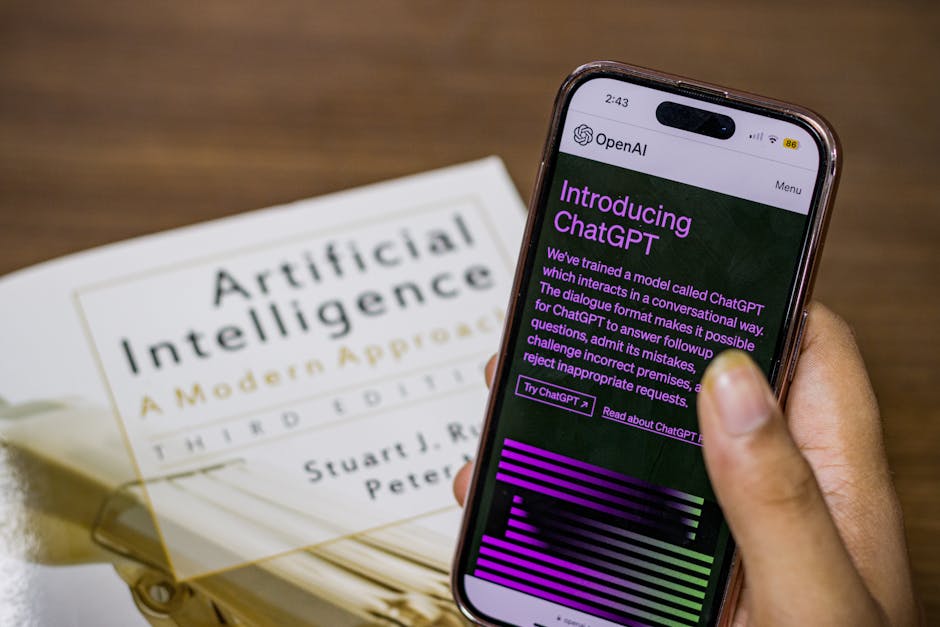
This guide covers everything you need to know about best ai image generators comparison, including practical examples, step-by-step instructions, and actionable tips you can implement today.
The world of digital creation has been turned on its head. Are you still struggling to find the perfect stock photo or spending hours trying to sketch a concept? 💡 Well, what if you could conjure stunning, unique images from thin air, just by typing a few words?
That's the magic of AI image generators, and they're no longer just for tech wizards. In this comprehensive guide, we've rolled up our sleeves, extensively tested seven of the leading AI image generation tools, and are ready to reveal their strengths, weaknesses, and exactly who they're best for. Get ready to supercharge your creativity and productivity!
🚀 The Rise of AI Image Generation: A Game Changer
Artificial intelligence has moved beyond automating spreadsheets and writing emails. Today, AI can transform simple text prompts into intricate, breathtaking visuals – from photorealistic portraits to abstract art, product mockups, and fantastical landscapes. These tools are democratizing design, making high-quality visual content accessible to everyone, regardless of artistic skill.
Whether you're a marketer needing fresh ad creatives, a blogger searching for unique header images, an artist looking for inspiration, or just curious about the future of digital art, understanding these tools is crucial. We've put them through their paces to help you find your perfect AI creative partner. Let's dive in!
🎨 7 AI Image Generators: Tested, Ranked & Revealed!
We've meticulously evaluated each tool based on image quality, ease of use, feature set, prompt understanding, and pricing models. Here’s what we found:
1. Midjourney: The Artistic Visionary
Midjourney has quickly become synonymous with high-quality, often ethereal, and visually stunning AI art. It operates primarily through Discord, which might seem a little unusual at first, but its results speak for themselves.
Key Features:
- Unparalleled Aesthetic: Known for its distinctive, often painterly and cinematic style.
- Advanced Prompting: Supports complex prompts, aspect ratios, negative prompts, and image prompts.
- Variations & Upscaling: Offers multiple variations of generated images and robust upscaling options.
- Community Focus: The Discord environment fosters learning and sharing among users.
Pros:
- ✅ Produces incredibly artistic and unique images, often requiring less prompt engineering than others for good results.
- ✅ Excellent for abstract concepts, character design, and mood imagery.
- ✅ Continuously evolving with frequent model updates (e.g., V5.2, V6 alpha).
- ✅ Strong community support and inspiration.
Cons:
- ❌ Discord-based interface can be a learning curve for new users.
- ❌ Not ideal for photorealistic images with precise details (e.g., text, specific brand logos).
- ❌ No free trial beyond very limited initial generations.
- ❌ Can be harder to achieve consistent character appearances across multiple images.
Best For:
- Digital artists seeking inspiration and unique styles.
- Graphic designers needing abstract or conceptual visuals.
- Creators looking for high-quality, aesthetically pleasing art for blogs, social media, or personal projects.
Pricing:
Midjourney offers various paid subscription tiers starting from $10/month, granting access to GPU time for image generation. There's no longer a free tier for new users.
Practical Tip:
Experiment with different styles and aspect ratios. For example, add "—ar 16:9" for wide cinematic shots or "—style raw" to reduce Midjourney's default aesthetic influence and get more neutral results.
2. DALL-E 3 (via ChatGPT Plus/Copilot/Bing Image Creator): The Intelligent Communicator
DALL-E 3, developed by OpenAI, excels at understanding natural language prompts. While not a standalone tool, it's integrated into ChatGPT Plus, Microsoft Copilot, and Bing Image Creator, making it incredibly accessible and powerful.
Key Features:
- Superior Prompt Understanding: Interprets complex, multi-layered prompts with remarkable accuracy.
- Text Generation: One of the few AI image generators that can accurately render legible text within images.
- Integrated Experience: Seamlessly accessible within conversational AI tools like ChatGPT.
- Refinement through Conversation: You can iteratively refine images by simply chatting with the AI.
Pros:
- ✅ Excellent for generating images that precisely match detailed textual descriptions.
- ✅ Can generate accurate, readable text within images, a major differentiator.
- ✅ User-friendly, especially through Bing Image Creator (free) or ChatGPT's conversational interface.
- ✅ Great for iterating on ideas and making small adjustments via chat.
Cons:
- ❌ Image output can sometimes lack the artistic flair or unique aesthetic of Midjourney.
- ❌ Less control over specific artistic parameters compared to more advanced tools.
- ❌ Resolution might be lower than some dedicated tools (Bing Image Creator).
- ❌ Requires a paid subscription to ChatGPT Plus for the most versatile experience.
Best For:
- Marketers needing specific visual concepts with embedded text.
- Bloggers and content creators requiring highly descriptive imagery.
- Beginners who want an intuitive, conversational approach to image generation.
- Anyone using Microsoft Copilot or Bing for general tasks.
Pricing:
DALL-E 3 is accessible for free via Bing Image Creator (with daily boosts). It's also included with Microsoft Copilot (free) and ChatGPT Plus ($20/month).
Practical Tip:
When using DALL-E 3 via ChatGPT, don't just give one prompt. Ask it to generate an image, then give feedback like, "Make the sky a bit darker," or "Add a small bird in the corner," to guide the AI to your desired result.
3. Leonardo.AI: The Stable Diffusion Powerhouse for All
Built on the robust Stable Diffusion model, Leonardo.AI offers an incredibly user-friendly platform with powerful features, making advanced AI generation accessible to beginners and pros alike. It's a fantastic blend of control and simplicity. 🚀
Key Features:
- Diverse Models: Access to a vast library of fine-tuned Stable Diffusion models, including community-trained ones.
- Image-to-Image: Transform existing images into new styles or variations.
- Canvas Editor: An advanced in-painting/out-painting tool for precise image manipulation.
- Prompt Generation: AI-powered prompt suggestions to kickstart your creativity.
- ControlNet Integration: Advanced control over image composition (e.g., pose, depth maps).
Pros:
- ✅ Highly versatile due to the wide array of Stable Diffusion models.
- ✅ Excellent balance of user-friendliness and advanced features.
- ✅ Generous free tier for daily use.
- ✅ Strong community and active development.
- ✅ Ideal for generating specific styles and high-quality assets.
Cons:
- ❌ Can be overwhelming initially due to the sheer number of options and models.
- ❌ Quality can vary significantly between different models; finding the best one for your need takes experimentation.
- ❌ Advanced features like ControlNet require a bit of a learning curve.
Best For:
- Artists and designers who want fine-grained control over their AI art.
- Game developers needing unique textures, concepts, or character art.
- Users who want to explore different artistic styles and models.
- Anyone looking for a powerful free tool with upgrade potential.
Pricing:
Leonardo.AI offers a very generous free tier providing daily tokens. Paid plans start around $10/month for more tokens and features.
Practical Tip:
Explore the "Community Feed" to see what others are creating and the prompts they used. This is a fantastic way to discover new models and learn effective prompting techniques. Don't be afraid to remix public prompts!
4. Adobe Firefly: The Creative Suite Companion
Adobe Firefly is Adobe's entry into the generative AI space, deeply integrated with its Creative Cloud ecosystem. It focuses on commercial viability and creative workflows, ensuring content is safe for commercial use.
Key Features:
- Commercial Safety: Trained on Adobe Stock and public domain content, designed for commercial use.
- Generative Fill/Expand: Seamlessly add or remove elements, or expand image boundaries.
- Text Effects: Apply creative styles to text with AI.
- Integration: Directly integrated into Adobe Photoshop and other Creative Cloud apps.
Pros:
- ✅ Designed for commercial use, offering peace of mind regarding copyright and licensing.
- ✅ Excellent for in-painting, out-painting, and precise image editing within Photoshop.
- ✅ Intuitive web interface with clear controls for style, color, and lighting.
- ✅ Great for generating textures, patterns, and background elements.
Cons:
- ❌ Image generation quality can sometimes feel less "artistic" or novel compared to Midjourney.
- ❌ Focuses more on practical utility within the Adobe ecosystem than pure artistic exploration.
- ❌ Requires an Adobe Creative Cloud subscription for full benefits.
- ❌ Can be slower in generating images compared to some rivals.
Best For:
- Graphic designers and photographers already in the Adobe ecosystem.
- Businesses and marketers needing commercially safe images and quick design iterations.
- Anyone requiring generative fill and expansion capabilities for photo editing.
Pricing:
Firefly offers a free web version with monthly credits. Full integration and more credits come with Adobe Creative Cloud subscriptions (e.g., Photoshop, All Apps plan).
Practical Tip:
Use Firefly's "Generative Fill" directly within Photoshop to seamlessly extend backgrounds or remove unwanted objects from your existing photos. It's incredibly powerful for photo manipulation and retouching.
5. DreamStudio (Stable Diffusion's Official Interface): The Direct Approach
DreamStudio is the official web interface for Stability AI's Stable Diffusion models. It offers a straightforward, powerful way to access the latest iterations of Stable Diffusion without needing to set up complex local installations.
Key Features:
- Latest Stable Diffusion Models: Direct access to cutting-edge models like SDXL.
- Fine-Grained Controls: Adjustments for prompt strength, CFG scale, seed, number of steps, and more.
- Image-to-Image: Generate new images based on an existing image and a text prompt.
- Inpainting/Outpainting: Modify specific parts of an image or extend its boundaries.
Pros:
- ✅ Provides direct, no-frills access to the powerful Stable Diffusion models.
- ✅ Excellent for users who want to experiment with advanced parameters.
- ✅ Continuously updated with the newest Stable Diffusion technologies.
- ✅ Good quality output, especially with SDXL.
Cons:
- ❌ Can be less beginner-friendly than platforms like Leonardo.AI due to numerous technical settings.
- ❌ User interface is functional but lacks the polish of some competitors.
- ❌ Credit-based system; can become costly for heavy use.
- ❌ Less community-driven model sharing compared to Leonardo.AI.
Best For:
- Advanced users and developers who want direct control over Stable Diffusion parameters.
- Researchers and enthusiasts who want to test the latest Stable Diffusion models.
- Users comfortable with technical settings to fine-tune generations.
Pricing:
DreamStudio operates on a credit system. You purchase credits, which are then used for generations. New users often receive a small amount of free credits to start.
Practical Tip:
If you're delving into DreamStudio, pay attention to the "CFG scale" and "Steps" parameters. Lower CFG values (e.g., 4-7) give the AI more creative freedom, while higher values (e.g., 10-15) make it stick more closely to your prompt. More steps generally mean more detail but also consume more credits.
6. Canva's Magic Media: Design Integration at Its Best
Canva, already a beloved design tool, has integrated AI image generation directly into its platform with "Magic Media." This makes it incredibly easy for existing Canva users to create images without leaving their workflow.
Key Features:
- Seamless Canva Integration: Generate images directly within your Canva designs.
- User-Friendly Interface: Simple text-to-image and text-to-video options.
- Style Options: Choose from various artistic styles like "Photo," "Dreamy," "Anime," "Watercolor," etc.
- Quick & Convenient: Fast generation of images that can be immediately dropped into your projects.
Pros:
- ✅ Incredibly easy to use for anyone familiar with Canva.
- ✅ Perfect for quickly generating design assets, social media graphics, and presentations.
- ✅ Offers a good variety of styles to choose from.
- ✅ Eliminates the need to switch between multiple tools.
Cons:
- ❌ Less powerful or versatile than dedicated AI art generators.
- ❌ Image quality can be inconsistent, and complex prompts might not be fully realized.
- ❌ Limited advanced controls compared to Midjourney or Leonardo.AI.
- ❌ Credit-based system limits free usage.
Best For:
- Canva users who need quick, simple images for their designs.
- Small businesses and content creators on a budget.
- Beginners looking for a straightforward AI image generation experience.
Pricing:
Canva's Magic Media offers a limited number of free generations daily. Canva Pro subscribers get significantly more generations.
Practical Tip:
Use Canva's Magic Media for supplementary images, icons, or background elements rather than highly detailed or photorealistic central images. Combine its AI generation with Canva's extensive library of templates and design elements for best results. For example, "a sleek, minimalist icon of a coffee cup, vector art style" works great!
7. Fotor AI Image Generator: Quick & Feature-Rich Editor
Fotor is well-known as a comprehensive online photo editor, and its AI image generator seamlessly integrates into its suite of tools. It's a great option for those who want to generate images and then immediately edit them.
Key Features:
- Integrated Editing: Generate an image and instantly enhance it with Fotor's editing tools.
- Style Presets: Offers a wide range of artistic styles and moods.
- Batch Processing: Generate multiple images at once.
- Simple Interface: Very user-friendly for text-to-image and image-to-image.
Pros:
- ✅ Excellent for users who need an all-in-one generate-and-edit solution.
- ✅ Easy to navigate interface, very beginner-friendly.
- ✅ Good variety of styles and aspect ratios.
- ✅ Useful for quickly creating social media graphics or simple visual assets.
Cons:
- ❌ Image quality can sometimes be less refined than top-tier generators.
- ❌ Lacks the advanced controls and customization of tools like Midjourney or Leonardo.AI.
- ❌ The free tier has limitations, and watermarks may be applied to images.
Best For:
- Users who prioritize integrated editing capabilities.
- Beginners looking for a simple, straightforward AI image generator.
- Content creators needing quick visual assets for social media or blog posts.
Pricing:
Fotor offers a free tier with limited generations and features. Paid plans unlock more generations, advanced editing tools, and higher resolutions.
Practical Tip:
After generating an image, don't just download it. Take advantage of Fotor's built-in editing suite. You can easily crop, resize, add filters, or even remove backgrounds without leaving the platform, saving you time and effort! ⚡
🏆 Our Ranking: Who Comes Out on Top?
Ranking these powerful tools is tough, as the "best" often depends on your specific needs. However, based on overall quality, versatility, ease of use, and unique capabilities, here's our general ranking:
- Midjourney: For pure artistic quality and unique aesthetic.
- Leonardo.AI: For power, versatility, and advanced features, especially on a budget.
- DALL-E 3 (via ChatGPT Plus/Bing): For superior prompt understanding and integrated text generation.
- Adobe Firefly: For commercial use, seamless Adobe integration, and generative editing.
- DreamStudio: For direct access to the latest Stable Diffusion models and fine-tuned control.
- Canva's Magic Media: For quick, in-workflow design asset generation within Canva.
- Fotor AI Image Generator: For combined generation and immediate editing in a simple interface.
🌟 Best for Specific Use Cases:
- Best for Professional Artists/Artistic Vision: Midjourney
- Best for Beginners & Free Use: Bing Image Creator (DALL-E 3) & Leonardo.AI
- Best for Commercial & Design Integration: Adobe Firefly & Canva's Magic Media
- Best for Advanced Control & Custom Models: Leonardo.AI & DreamStudio
- Best for Accurate Prompt Understanding & Text: DALL-E 3
🎯 Conclusion: Your AI Creative Journey Starts Now!
The world of AI image generation is exploding, offering incredible tools for creativity, automation, and productivity. From the artistic masterpieces of Midjourney to the precise prompt understanding of DALL-E 3, and the versatile power of Leonardo.AI, there's a tool for everyone.
Don't just read about them – take action! Many of these tools offer generous free tiers or trials. We highly recommend you:
- Pick 2-3 tools that align most with your needs (e.g., one for free use, one for artistic flair, one for specific designs).
- Sign up for their free tiers/trials and spend an hour with each.
- Experiment with diverse prompts. Try simple, complex, and creative prompts.
- Join their communities (Discord for Midjourney/Leonardo.AI) to learn from others.
- Integrate them into your workflow. See how AI can save you time and spark new ideas.
The future of visual content is here, and it's powered by AI. Embrace these tools, and unlock a new level of creative potential! Happy generating! ✨
❓ FAQ: Your Burning Questions Answered
Q1: Are AI-generated images truly original, and can I use them commercially?
A: While AI generates "new" images based on its training data, the concept of "originality" is still evolving legally. For commercial use, Adobe Firefly is specifically trained on commercially safe content, making it a strong choice. Other tools may require you to check their terms of service or ensure you're comfortable with the potential legal implications. Generally, for personal or non-monetized use, you're usually in the clear. Always check the specific tool's licensing terms!
Q2: Do I need artistic skills to use these AI image generators?
A: Absolutely not! That's one of their greatest strengths. While understanding basic art concepts (like composition or color theory) can help you write better prompts, you don't need to be an artist to create stunning images. These tools are designed to democratize art creation, making it accessible for everyone, from beginners to seasoned pros.
Q3: What's the biggest challenge with AI image generation?
A: The biggest challenge is often "prompt engineering" – learning how to write effective prompts that get the AI to produce exactly what you envision. It's a skill that takes practice, patience, and experimentation. AI models are getting better at understanding natural language (DALL-E 3 is a prime example), but sometimes you need to be very specific or use certain keywords to guide the AI effectively. Don't be discouraged if your first few attempts aren't perfect!
Q4: Can I generate images for free?
A: Yes! Many tools offer generous free tiers or trials. Bing Image Creator (DALL-E 3) is completely free, offering daily "boosts." Leonardo.AI also has an excellent free tier with daily tokens. Canva's Magic Media and Fotor offer limited free generations. This allows you to experiment and find what works for you without upfront investment.
Have you tried any of these AI tools? What's been your experience? Share your thoughts in the comments below - I'd love to hear what's working for you!
Related Topics: #AI #ArtificialIntelligence #AITools #Productivity #Automation #Technology #Tutorial #Guide #TechTips
Comments
Post a Comment