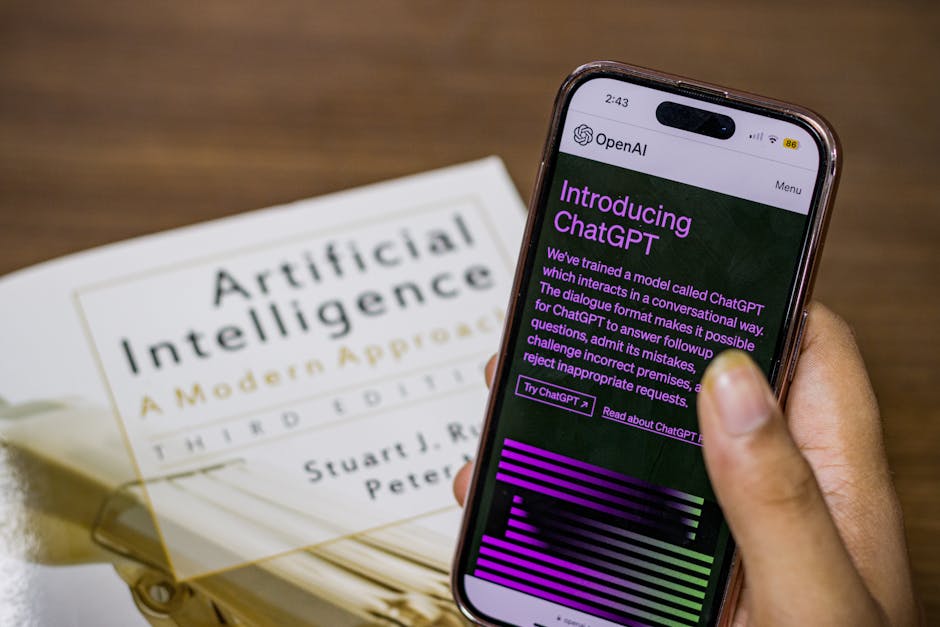
This guide covers everything you need to know about how to use ai for writing blog posts, including practical examples, step-by-step instructions, and actionable tips you can implement today.
Staring at a blank screen, battling writer's block, and struggling to meet content deadlines? You're not alone. What if I told you there's a powerful co-pilot waiting to help you craft amazing blog posts faster and more efficiently than ever before?
Artificial intelligence isn't just for tech gurus anymore; it's a game-changer for content creators. In this comprehensive guide, we'll dive into five practical AI tricks that will supercharge your blog post creation process, making it less daunting and far more productive. Get ready to transform your writing workflow! 🚀
1. AI for Brainstorming & Outline Generation: Conquer Writer's Block
The hardest part of writing is often just getting started. Writer's block can feel like an insurmountable wall, but AI can act as your personal brainstorming partner and outline architect, helping you lay a solid foundation for your content.
How AI Helps You Kickstart Ideas 💡
Instead of endlessly scrolling or staring blankly, you can prompt an AI to generate a multitude of ideas based on your topic. This is incredibly useful for finding fresh angles or topics you might not have considered.
Tools to Use:
- ChatGPT (OpenAI): Excellent for general brainstorming and idea generation.
- Claude (Anthropic): Known for its conversational abilities and understanding of complex prompts, making it great for nuanced topic exploration.
- Google Gemini (formerly Bard): Integrates well with Google's ecosystem, allowing for quick searches and idea validation.
Practical Steps:
- Define Your Core Topic: Start with a broad subject. For example: "Healthy breakfast ideas."
- Ask for Sub-topics/Angles: Prompt the AI: "Give me 10 unique blog post ideas about healthy breakfast options for busy professionals." Or: "Brainstorm creative angles for a blog post on sustainable living for beginners."
- Refine and Expand: If an idea sparks your interest, ask the AI to elaborate. "Expand on '5-minute healthy breakfasts you can prep the night before' – what are some key points to cover?"
Crafting a Robust Outline with AI
Once you have a solid idea, an outline is crucial for structuring your thoughts and ensuring a logical flow. AI can generate detailed outlines, saving you significant planning time.
Tools to Use:
- ChatGPT, Claude, Gemini: All are adept at generating structured outlines.
- Jasper AI: Offers specific "Blog Post Outline" templates that streamline this process, often integrating keywords automatically.
Practical Steps:
- Provide Your Topic and Target Audience: Be specific. "Create a detailed blog post outline about 'The Beginner's Guide to Home Composting' for eco-conscious homeowners aged 25-45."
- Specify Desired Sections: You can guide the AI. "Include an introduction, benefits, how-to steps, common mistakes, and a conclusion."
- Request Sub-points: Ask for more detail within each section. "For the 'How-to Steps' section, please list 5-7 actionable sub-points."
- Review and Customize: The AI will give you a draft. Review it, rearrange sections, add your unique insights, and flesh out points as needed. Remember, AI is a co-pilot, not a replacement for your expertise!
2. AI for Drafting & Expanding Content: Get Words on the Page Fast
Once your outline is ready, the next hurdle is filling it with engaging content. AI tools can dramatically accelerate the drafting process, helping you produce initial text quickly and efficiently, especially when you're facing a deadline or feeling a bit stuck.
Generating First Drafts and Paragraphs ⚡
Don't aim for perfection in the first draft; aim for completion. AI is excellent at generating coherent paragraphs and sections based on your outline points, allowing you to focus on refining later.
Tools to Use:
- ChatGPT, Claude, Gemini: Provide them with an outline heading and ask them to write a paragraph or section.
- Copy.ai: Has specific tools for blog section writing, intros, and conclusions.
- Writesonic: Offers an "AI Article Writer" that can generate entire articles based on keywords and an outline.
Practical Steps:
- Feed Your Outline Sections: Take each heading and sub-point from your outline.
- Prompt for Content: For example, if your outline has "Benefits of Composting: Reduces landfill waste", prompt the AI: "Write a paragraph explaining how home composting significantly reduces landfill waste and its environmental impact."
- Specify Tone and Length: You can add parameters like: "Write a compelling, enthusiastic paragraph (100 words) about the financial benefits of composting."
- Combine and Edit: Stitch the AI-generated sections together, ensuring smooth transitions. This isn't about letting AI write your whole post, but getting a solid starting point for each section.
Expanding and Elaborating on Key Points
Sometimes you have a great idea but struggle to flesh it out. AI can take a short sentence or bullet point and expand it into a more detailed explanation, offering different perspectives or examples.
Practical Steps:
- Highlight a Sentence or Bullet: Select a phrase like: "Composting enriches garden soil naturally."
- Ask the AI to Expand: Prompt: "Expand on 'Composting enriches garden soil naturally.' Explain the scientific process briefly and list 3 benefits for plant health."
- Request Examples or Analogies: If a concept is complex, ask the AI to simplify it. "Explain the concept of 'carbon-nitrogen ratio' in composting using a simple analogy for a beginner."
This trick is a huge productivity booster, especially for beginner-friendly content where clear, concise explanations are key. 🎯
3. AI for Optimizing SEO & Readability: Get Discovered & Keep Readers Hooked
Writing great content is one thing; making sure people actually *find* and *read* it is another. AI can be an invaluable asset for optimizing your blog posts for search engines (SEO) and ensuring they're easy and enjoyable for your audience to read.
Boosting Your SEO Game with AI 🚀
AI can help you identify relevant keywords, suggest optimal placement, and even craft meta descriptions that entice clicks. This automation is a huge time-saver for busy content creators.
Tools to Use:
- Surfer SEO (with AI integration): Analyzes top-ranking content for your target keywords and provides real-time suggestions on keywords to include, word count, headings, and more.
- Ahrefs/Semrush (with AI features): While primarily keyword research tools, their content graders and AI writing assistants can suggest improvements.
- ChatGPT, Claude, Gemini: Can generate keyword ideas, meta descriptions, and even brief SEO-friendly headings when prompted correctly.
Practical Steps:
- Keyword Research (AI-Assisted):
- Give your topic to an AI: "Suggest 10 long-tail keywords related to 'beginner home composting' with high search intent."
- Use a dedicated SEO tool like Surfer SEO. Input your primary keyword ("home composting for beginners") and let it analyze competitor content, giving you a list of essential terms to include.
- On-Page Optimization:
- Once you have your draft, paste it into an AI tool (or use Surfer SEO's content editor). Prompt: "Analyze this blog post for SEO optimization for the keyword 'home composting tips'. Suggest where I can naturally integrate the following keywords: [list of keywords]."
- Ask the AI to generate an SEO-friendly title and meta description: "Write 3 catchy, SEO-optimized blog post titles (under 60 characters) and 3 meta descriptions (under 160 characters) for a post about home composting for beginners, using the keyword 'easy composting'."
Enhancing Readability and Engagement
Even with great SEO, if your post is a wall of text or uses overly complex language, readers will bounce. AI can help you simplify language, vary sentence structure, and ensure a smooth reading experience.
Tools to Use:
- Grammarly (Premium): Beyond grammar, it offers suggestions for conciseness, clarity, engagement, and delivery, making your writing more impactful.
- Hemingway Editor: Identifies complex sentences, passive voice, and adverbs to make your writing bolder and clearer (not strictly AI, but a powerful readability tool).
- ChatGPT, Claude, Gemini: Can rewrite sections for different reading levels or tones.
Practical Steps:
- Simplify Complex Sentences: Copy a dense paragraph into your AI tool. Prompt: "Rewrite this paragraph for an 8th-grade reading level, focusing on clarity and simplicity:" [paste paragraph].
- Improve Flow and Transitions: If your post feels disjointed, ask the AI: "Read this section and suggest transitional phrases or sentences to improve the flow between paragraphs X and Y."
- Vary Sentence Structure: Prompt the AI: "Review this section and suggest ways to vary sentence length and structure to make it more engaging:" [paste section].
- Check for Tone: Ensure your tone is consistent. "Does this paragraph sound too formal for a friendly, conversational blog post? Suggest alternatives."
By leveraging AI for both SEO and readability, you're not just writing content; you're creating discoverable and delightful experiences for your readers. ✅
4. AI for Repurposing & Summarizing Content: Maximize Your Reach
You've poured effort into creating a fantastic blog post. Don't let it live and die on your blog! AI can help you effortlessly repurpose your content into various formats and create concise summaries, extending its life and reach across different platforms.
Transforming Content for Different Platforms 🔄
Each platform (social media, email, video scripts) has its own audience and format requirements. AI can help you adapt your core message to fit these needs without starting from scratch.
Tools to Use:
- ChatGPT, Claude, Gemini: Highly versatile for all types of content transformation.
- Repurpose.io (integration with AI): While primarily an automation tool, it's increasingly leveraging AI to assist in transforming content.
- Pictory AI: Can convert long-form text content into short video clips, automatically adding visuals and captions.
Practical Steps:
- Social Media Posts:
- Paste your blog post link or text into the AI. Prompt: "Generate 5 distinct social media posts (Twitter thread, Instagram caption with hashtags, LinkedIn update) based on this blog post about [topic]."
- Specify length and call-to-action: "Create a short, punchy Facebook post (under 100 words) encouraging clicks to this blog post, including a question to spark engagement."
- Email Newsletter Snippets:
- Prompt: "Write a concise email newsletter snippet (150 words) announcing my new blog post on [topic]. Highlight the main benefit for the reader and include a clear call-to-action."
- Video Scripts/Shorts:
- Ask the AI to condense your post into a script: "Outline a 60-second TikTok script summarizing the key benefits of composting from this blog post, including a hook and a call to action."
Creating Concise Summaries and Key Takeaways
Not everyone has time to read your entire blog post. Providing summaries or key takeaways makes your content more accessible and digestible, improving user experience and engagement.
Practical Steps:
- Generate a Short Summary: Paste your entire blog post. Prompt: "Provide a 3-sentence summary of this blog post." or "Summarize this blog post into 150 words, focusing on the main arguments and conclusions."
- Extract Key Takeaways: Ask for actionable points. "List 5 key takeaways or actionable tips from this blog post for someone who only has a minute to read."
- Create an Executive Summary: For longer, more detailed posts, an executive summary at the beginning can be very helpful. "Write an executive summary for this comprehensive guide on [topic]."
Repurposing and summarizing with AI isn't just about saving time; it's about being strategic with your content and reaching a wider audience more effectively. It's a true productivity hack! 💡
5. AI for Polishing & Editing: Refine Your Masterpiece
The final step before hitting publish is crucial: editing. Even the most seasoned writers benefit from a fresh pair of eyes. AI can act as that meticulous editor, catching errors, improving clarity, and refining your writing style to a professional sheen.
Grammar, Spelling, and Punctuation Checks ✅
Let's face it, typos happen. AI tools are incredibly good at identifying and correcting grammatical errors, spelling mistakes, and punctuation issues that human eyes might miss, especially after hours of writing.
Tools to Use:
- Grammarly (Free & Premium): The gold standard for real-time grammar, spelling, and punctuation checks across almost any platform.
- ProWritingAid: Offers comprehensive reports on grammar, style, clichés, sticky sentences, and more.
- Microsoft Word/Google Docs built-in tools (AI-enhanced): Increasingly sophisticated at catching basic errors and suggesting improvements.
Practical Steps:
- Paste into a Dedicated Editor: Copy your final draft into Grammarly or ProWritingAid.
- Review Suggestions: Go through each suggested correction carefully. Don't just accept everything; understand *why* the AI is suggesting a change and ensure it aligns with your intended meaning and style.
- Focus on Major Issues First: Prioritize critical errors like subject-verb agreement or missing commas before diving into stylistic suggestions.
Enhancing Style, Tone, and Clarity
Beyond basic errors, AI can help you elevate your writing style, ensuring your tone is consistent and your message is crystal clear. This is where AI moves from being a spell-checker to a true writing assistant.
Tools to Use:
- Grammarly (Premium): Provides advanced suggestions for conciseness, word choice, sentence variety, and tone adjustments.
- ChatGPT, Claude, Gemini: Can rewrite sections for specific tones (e.g., formal, informal, encouraging, expert) or to improve clarity.
- Jasper AI: Offers various "templates" for rephrasing, simplifying, or expanding content with a particular tone in mind.
Practical Steps:
- Refine for Conciseness: Highlight a wordy sentence or paragraph. Prompt your AI: "Rewrite this more concisely without losing the original meaning:" [paste text].
- Adjust Tone: If you want your post to sound more friendly and less academic, select a section. Prompt: "Rewrite this paragraph in a more conversational and friendly tone suitable for a blog post targeting beginners."
- Improve Word Choice: Struggling for the perfect synonym? Ask the AI: "Suggest alternative words for 'good' in this sentence to make it more impactful."
- Check for Flow and Cohesion: After making edits, read your post aloud or use an AI to identify awkward phrasing. Prompt: "Review this section for awkward phrasing or sentences that don't flow well:" [paste section].
Remember, AI is a tool to assist, not replace, your judgment. Always give your blog post a final human read-through before publishing to ensure it truly reflects your voice and message. Your readers will appreciate the polish and professionalism!
Conclusion: Embrace AI to Elevate Your Blogging Game
You've now got five powerful AI tricks up your sleeve to revolutionize your blog post creation. From banishing writer's block with intelligent brainstorming and outline generation, to speeding up your drafting, optimizing for SEO and readability, strategically repurposing content, and finally, polishing every word to perfection – AI is truly your secret weapon for content creation.
Your Actionable Next Steps:
- Pick One Trick to Start: Don't try to implement everything at once. Choose the trick that addresses your biggest blogging pain point (e.g., idea generation if you struggle with writer's block).
- Experiment with Tools: Many AI tools offer free tiers or trials. Start with a free, beginner-friendly tool like ChatGPT or Google Gemini.
- Practice Prompting: The better your prompts, the better the AI's output. Be specific, provide context, and iterate on your requests.
- Maintain Your Voice: Always remember that AI is a co-pilot. Your unique voice, insights, and expertise are what make your content truly special. Use AI to enhance, not replace, your authentic self.
Embrace these artificial intelligence tools as partners in your creative process. You'll not only save time and boost your productivity but also produce higher-quality, more engaging blog posts that resonate with your audience. Happy blogging! 🚀
FAQ: Your AI Blogging Questions Answered
Q1: Is using AI for blog posts considered cheating?
A: No, not at all! Think of AI as an advanced assistant, like a spell-checker, a research aide, or a brainstorming partner. It helps you work more efficiently and overcome creative blocks. The key is to use it responsibly: always review, edit, and infuse your unique voice and expertise into the content. Don't simply copy and paste AI output; use it as a starting point to build upon.
Q2: Which AI tool is best for beginners?
A: For beginners, ChatGPT (free version) and Google Gemini are excellent starting points. They are conversational, intuitive, and versatile enough for brainstorming, drafting, and basic editing. Once you're comfortable, you might explore more specialized tools like Grammarly (for editing) or Jasper AI (for more structured content creation) which often have free trials.
Q3: Can AI write an entire blog post for me?
A: Technically, yes, many AI tools *can* generate an entire blog post. However, we strongly advise against simply publishing AI-generated content without significant human review and editing. AI-written posts often lack a unique voice, personal anecdotes, deep insights, or specific up-to-date facts. Use AI to generate drafts, outlines, or sections, then thoroughly revise, fact-check, and personalize it to make it truly yours. Your human touch is irreplaceable for quality, authoritative content.
Q4: Will using AI affect my blog's SEO negatively?
A: Not if used correctly! Google's guidelines emphasize helpful, high-quality, and original content, regardless of how it's produced. If you use AI to generate *fluff* or low-quality content, it could negatively impact your SEO. However, using AI to *enhance* your content (e.g., for keyword research, better readability, generating a strong outline) can actually improve your SEO by helping you create more relevant, well-structured, and engaging posts. Always prioritize quality and value for your readers.
Q5: How can I ensure my AI-assisted content still sounds like me?
A: This is a crucial point! To maintain your unique voice, always treat AI output as a draft. After the AI generates content, go back and:
- Inject your personality: Add personal stories, opinions, and specific examples only you can provide.
- Adjust the tone: Guide the AI to match your desired tone, then fine-tune it yourself.
- Rephrase sentences: Don't be afraid to rewrite AI sentences in your own words.
- Use your unique vocabulary: If you have certain phrases or words you frequently use, make sure they're present.
Think of AI as providing the clay, and you are the sculptor, shaping it into your masterpiece.
Have you tried any of these AI tools? What's been your experience? Share your thoughts in the comments below - I'd love to hear what's working for you!
Related Topics: #AI #ArtificialIntelligence #AITools #Productivity #Automation #Technology #Tutorial #Guide #TechTips
Comments
Post a Comment