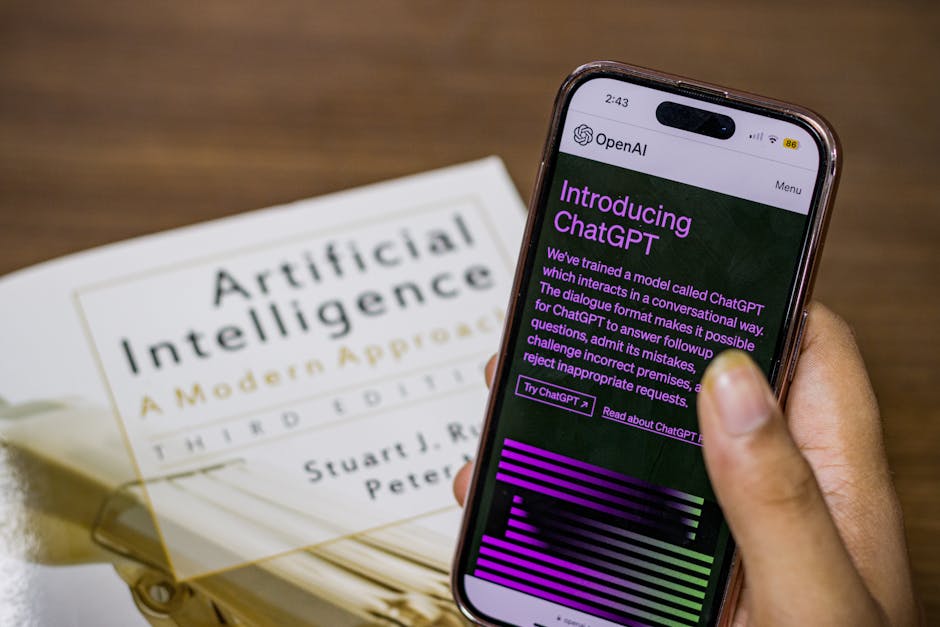
This guide covers everything you need to know about how to automate tasks with ai in 2026, including practical examples, step-by-step instructions, and actionable tips you can implement today.
The year is 2026. Are you still bogged down by mundane, repetitive tasks that steal your most precious resource – time? If so, you're missing out on a massive opportunity to supercharge your productivity and reclaim your day.
Artificial Intelligence isn't just a buzzword for tech giants anymore; it's a practical, accessible toolkit for individuals and small businesses alike. In this comprehensive guide, we're going to dive deep into 5 AI superpowers that will be mainstream by 2026, showing you exactly how to leverage them with specific tools, real-world examples, and actionable tips to automate tasks and boost your productivity like never before. Get ready to transform the way you work! 🚀
1. Intelligent Content Generation & Curation: Your AI Writing Assistant
Imagine having a tireless co-writer, brainstorming partner, and editor rolled into one. By 2026, AI's ability to generate human-quality text, summarize information, and even create multimedia content will be a fundamental superpower for virtually any professional. This isn't just about writing blog posts; it's about automating everything from email drafts to social media updates and even video scripts.
Beyond Basic Text: Visuals and Audio
While AI content generation started with text, it's rapidly expanding into visual and auditory realms. By 2026, you won't just be generating articles; you'll be creating entire content packages with AI-generated images, videos, and voiceovers. This significantly reduces the time and cost associated with producing high-quality marketing and communication materials.
- Core Function: AI algorithms learn from vast datasets to understand context, tone, and style. They can then generate original content, rephrase existing text, summarize long documents, or even expand on brief ideas.
- Why it's a superpower: Massively reduces time spent on drafting, researching, and editing. Ensures consistency in brand voice and can help overcome writer's block.
🛠️ Practical Tools to Try Now (and Master by 2026):
- ChatGPT / Google Gemini / Anthropic Claude: These large language models are your go-to for brainstorming, drafting emails, summarization, creative writing, and even generating code snippets. They are incredibly versatile and often have free tiers, making them highly beginner-friendly.
- Example: Ask ChatGPT to "Draft a polite email declining a meeting invitation, suggesting an alternative time."
- Jasper AI / Copy.ai: If you're serious about marketing copy, these tools are built specifically for sales pages, ad copy, blog posts, and social media captions. They offer advanced templates and features for SEO optimization.
- Example: Use Jasper to generate 5 different ad headlines for a new product launch, focusing on benefits for busy professionals.
- HeyGen / Synthesys: These platforms allow you to create professional videos from text. Simply input your script, choose an AI avatar, and the AI generates a talking head video, complete with lip-syncing and natural voice.
- Example: Turn a blog post into a short explainer video for YouTube or social media without needing a camera or actor.
💡 Real-World Use Cases & Tips:
- Automate your email outreach: Use AI to draft initial sales emails, follow-ups, or even internal communications. Refine the AI's output to match your personal style.
- Repurpose content effortlessly: Transform a long blog post into 10 social media snippets, a video script, and an email newsletter with AI in minutes.
- Conquer writer's block: Give AI a few keywords, and it can generate outlines, headlines, or opening paragraphs to get you started.
- Summarize lengthy documents: Quickly get the gist of long reports, articles, or meeting transcripts, saving hours of reading.
Actionable Tip: Start with a free AI chatbot like ChatGPT. Experiment with different prompts for tasks you find repetitive, like drafting acknowledgments or summarising articles. The more you "talk" to it, the better it understands your needs. ✅
2. Advanced Data Analysis & Insight Generation: Your AI Business Analyst
Data is everywhere, but extracting meaningful insights from it can be a monumental task. By 2026, AI won't just process numbers; it will act as your personal data analyst, sifting through vast datasets, identifying hidden patterns, predicting future trends, and presenting findings in understandable formats. This superpower transforms raw data into actionable intelligence, democratizing sophisticated analytics for everyone.
Making Sense of the Numbers
Gone are the days when you needed a specialized data scientist to uncover trends. AI tools are becoming increasingly intuitive, allowing even non-technical users to upload data, ask questions in natural language, and receive insightful answers, visualizations, and predictive models. This makes data-driven decision-making accessible to more people in an organization.
- Core Function: AI algorithms can analyze structured and unstructured data, perform complex statistical analyses, identify correlations, detect anomalies, and generate predictive models.
- Why it's a superpower: Speeds up decision-making, uncovers opportunities or risks that human analysis might miss, and automates report generation.
🛠️ Practical Tools to Try Now (and Master by 2026):
- Microsoft Excel / Google Sheets (with AI features): Both popular spreadsheet tools are integrating powerful AI capabilities. Excel's "Analyze Data" feature and Google Sheets' "Explore" function can automatically identify trends, patterns, and create charts based on your data.
- Example: Upload your sales data to Excel, click "Analyze Data," and it will suggest pivot tables and charts showing top-selling products or sales trends.
- ChatGPT / Google Gemini (with advanced data analysis capabilities): Newer versions can directly upload spreadsheets (CSV, Excel) and process them. You can ask questions like, "What's the average customer lifetime value in this dataset?" or "Identify the top 3 contributing factors to customer churn."
- Example: Upload your customer feedback data and ask, "Summarize the main pain points mentioned by customers in Q3."
- Tableau / Power BI: These business intelligence tools are incorporating more AI to automate dashboard creation, suggest relevant visualizations, and even explain insights in plain language. While not always free, many offer trial versions.
- Example: Set up a monthly sales dashboard in Power BI, which automatically updates and flags any significant deviations from forecasts.
💡 Real-World Use Cases & Tips:
- Automate financial reporting: Connect AI tools to your accounting software to automatically generate monthly profit/loss statements, identify spending anomalies, or forecast cash flow.
- Understand customer behavior: Analyze purchase history, website interactions, and demographic data to segment customers, predict churn, or personalize marketing campaigns.
- Optimize inventory management: Use predictive analytics to forecast demand for products, minimizing overstocking or stockouts.
- Streamline market research: Analyze competitor data, market trends, and sentiment analysis from social media to inform strategic decisions.
Actionable Tip: Start small. Take a dataset you regularly work with (e.g., a customer list, sales figures) and upload it to ChatGPT or use Excel's "Analyze Data." Ask it specific questions you'd normally spend hours trying to answer. You’ll be amazed at the speed and depth of insights. 🎯
3. Hyper-Personalized Communication & Customer Service: Your AI Engagement Specialist
In a world saturated with information, personalized communication cuts through the noise. By 2026, AI will be your ultimate engagement specialist, automating and enhancing every interaction – from customer support to sales outreach and internal communications. This superpower allows businesses and individuals to deliver highly relevant, timely, and empathetic messages at scale, fostering stronger relationships and driving better outcomes.
Your 24/7 Digital Assistant
Imagine having an assistant who can answer customer questions around the clock, draft personalized sales emails based on client behavior, or even schedule meetings without a single back-and-forth email. AI makes this a reality, ensuring that every interaction feels bespoke, even when automated. This frees up human teams to focus on complex issues and high-value strategic conversations.
- Core Function: AI processes natural language to understand user intent, accesses knowledge bases to provide answers, and generates contextually relevant responses. It can also analyze user data to tailor communication strategies.
- Why it's a superpower: Improves customer satisfaction, increases conversion rates, saves significant time on routine inquiries, and provides a consistent brand voice.
🛠️ Practical Tools to Try Now (and Master by 2026):
- Zendesk / Intercom (with AI Chatbots): These customer service platforms integrate AI chatbots that can handle common FAQs, route complex queries to the right human agent, and even perform basic troubleshooting. Many offer beginner-friendly setup.
- Example: Set up a chatbot on your website to instantly answer questions about shipping, returns, or product features, reducing support ticket volume.
- HubSpot / Salesforce (with AI for Sales & Marketing): CRM platforms are leveraging AI for lead scoring, personalizing email sequences, suggesting content for sales reps, and automating follow-ups.
- Example: Use AI within HubSpot to generate personalized email subject lines and body copy for different customer segments, increasing open and click-through rates.
- Calendly (with smart scheduling): While not strictly an AI chatbot, Calendly integrates with your calendar and allows people to book meetings based on your availability, eliminating back-and-forth emails. AI enhancements are making these smarter, suggesting optimal times based on meeting purpose and participant history.
- Example: Send a Calendly link to prospects, allowing them to book a demo without any manual coordination.
- Gmail / Outlook (with AI drafting): Both email clients offer AI-powered suggestions for replies, sentence completion, and even full email drafts, helping you respond faster and more effectively.
- Example: When replying to a client's inquiry, Gmail's AI might suggest a polite and concise draft that you can quickly review and send.
💡 Real-World Use Cases & Tips:
- Automate customer support: Deploy a chatbot to handle 70-80% of common customer questions, freeing your human agents for more complex issues.
- Personalize sales outreach: Use AI to analyze prospect data and generate highly personalized introductory emails or LinkedIn messages that resonate with their specific needs.
- Streamline onboarding: Create automated, personalized email sequences for new customers or employees, guiding them through initial steps and resources.
- Improve internal communication: Use AI to summarize long email threads or team chat discussions, ensuring everyone stays up-to-date quickly.
Actionable Tip: Identify one repetitive communication task, like answering FAQs on your website or drafting standard follow-up emails. Explore a free chatbot trial (e.g., from Intercom or Zendesk) or use your email client's AI drafting features. See how much time you save! ⚡
4. Intelligent Workflow Automation & Integration: Your AI Digital Orchestrator
Modern work involves a multitude of apps and systems that often don't "talk" to each other seamlessly. By 2026, AI will act as your digital orchestrator, intelligently connecting disparate tools, triggering actions across platforms, and automating multi-step workflows with unprecedented ease. This superpower transforms fragmented processes into fluid, efficient operations, eliminating manual data entry and ensuring consistency across your digital ecosystem.
The Digital Glue for Your Business
Forget manual copy-pasting or complex coding to get your applications to work together. AI-powered automation platforms are becoming smart enough to understand natural language commands for setting up integrations, suggesting optimal workflows, and even self-correcting when issues arise. This means anyone can build sophisticated automations without being a programmer.
- Core Function: AI interprets rules and conditions to connect different software applications, allowing data to flow between them and trigger automated actions based on predefined or learned patterns.
- Why it's a superpower: Eliminates repetitive manual tasks, reduces errors, saves immense time, and ensures data consistency across all your tools.
🛠️ Practical Tools to Try Now (and Master by 2026):
- Zapier: The industry leader in app integration. Zapier's AI features are constantly expanding, allowing you to describe a workflow in natural language and have it suggest "Zaps" (automations). It connects thousands of apps and offers a generous free tier, making it extremely beginner-friendly.
- Example: "When I get a new lead in Facebook Ads, add them to my Google Sheet and send a welcome email from Gmail."
- Make.com (formerly Integromat): A more visual and powerful alternative to Zapier for complex, multi-step workflows. Make.com provides a canvas where you can drag and drop modules to build intricate automations, often integrating with AI services directly.
- Example: "Monitor a specific folder in Google Drive for new PDFs, extract key information using an AI OCR tool, then add it to a database in Airtable, and notify my team in Slack."
- Microsoft Power Automate: If your organization is heavily invested in the Microsoft ecosystem (Office 365, SharePoint, Dynamics 365), Power Automate is a robust tool for automating workflows, including AI Builder features for things like form processing or text recognition.
- Example: Automatically save all email attachments from a specific sender to a SharePoint folder and notify the relevant team in Microsoft Teams.
- Airtable (with automation features): While primarily a hybrid spreadsheet/database, Airtable's automation blocks allow you to create powerful workflows directly within your base, often integrating with other services.
- Example: When a task is marked "complete" in Airtable, automatically update its status in Asana and send a congratulatory message to the team in Slack.
💡 Real-World Use Cases & Tips:
- Automate lead management: Automatically capture leads from your website form, add them to your CRM, and trigger a personalized email sequence.
- Streamline social media: Schedule posts across multiple platforms, cross-post new blog articles, or save mentions to a tracking sheet.
- Simplify project management: Automatically create tasks in your project management tool based on new emails, update statuses, or move items between stages.
- Enhance data syncing: Ensure customer information is consistent across your sales, marketing, and support tools, eliminating manual updates.
Actionable Tip: Identify one manual task you do regularly that involves moving information between two different apps. Sign up for Zapier's free tier and try to build a simple "Zap" to automate it. Even a small automation can save you minutes every day, which adds up! 💡
5. Advanced Knowledge Management & Search: Your AI Information Curator
In our information-rich world, finding the right piece of information at the right time can be like finding a needle in a haystack. By 2026, AI will transform how we manage and access knowledge, acting as your personal information curator. This superpower ensures that every document, conversation, and data point is not just stored, but intelligently organized, searchable, and instantly retrievable, making institutional knowledge a true asset rather than a burden.
Never Lose Information Again
Imagine being able to ask your company's entire knowledge base a question in natural language and get an instant, accurate answer, complete with sources. AI-powered knowledge management goes beyond simple keyword search. It understands context, identifies relationships between different pieces of information, and can even summarize complex documents on demand. This ensures that valuable insights and documents are never lost, and everyone has instant access to the information they need.
- Core Function: AI indexes and categorizes vast amounts of structured and unstructured data (documents, emails, chats, videos), understands natural language queries, and retrieves the most relevant information, often providing summaries or direct answers.
- Why it's a superpower: Reduces time spent searching for information, prevents knowledge loss, improves decision-making, and enhances team collaboration.
🛠️ Practical Tools to Try Now (and Master by 2026):
- Notion AI: If you use Notion for note-taking, project management, or a company wiki, Notion AI is a game-changer. It can summarize long pages, brainstorm ideas, answer questions based on your existing content, and even draft new content within your workspace.
- Example: Ask Notion AI to "Summarize the key decisions from the Q2 marketing strategy meeting notes" or "Brainstorm 5 ideas for a new product feature based on our customer feedback database."
- Perplexity AI: This AI-powered search engine provides direct answers to your questions, citing its sources, making it excellent for quick research and fact-finding, moving beyond traditional web search. It's often free to use for basic queries.
- Example: Instead of sifting through search results, ask Perplexity, "What are the main challenges for small businesses entering the e-commerce market in 2024?"
- Internal Knowledge Base Systems (with AI search): Tools like Confluence, SharePoint, or even custom internal wikis are integrating AI to make their content more discoverable. This means employees can ask questions and get direct answers from internal documentation.
- Example: An employee asks the internal knowledge base, "What's the policy for remote work expenses?" and gets an immediate, accurate answer with a link to the full policy document.
- ChatGPT / Google Gemini (for document analysis): Upload documents (PDFs, Word docs) to these platforms and ask specific questions about their content, or request summaries, cross-references, or even rephrasing of complex sections.
- Example: Upload a lengthy legal document and ask, "What are the key contractual obligations for Party A?"
💡 Real-World Use Cases & Tips:
- Instant answers to internal queries: Employees can quickly find answers to HR questions, company policies, or project details without bothering colleagues.
- Accelerated research: Rapidly synthesize information from multiple sources for reports, presentations, or strategic planning.
- Onboarding new employees: Provide new hires with an AI-powered knowledge base where they can independently find answers to common questions about company culture, processes, and tools.
- Competitive intelligence: Use AI to quickly digest competitor reports, industry analyses, and news articles to stay ahead.
Actionable Tip: If you use Notion, activate Notion AI and try summarizing one of your longest pages. If not, try Perplexity AI for your next research task instead of Google. Experience how much faster you get to the core information. ✅
Conclusion: Your AI-Powered Future Starts Now
The future of work isn't about AI replacing humans; it's about AI empowering humans to achieve more than ever before. These 5 AI superpowers – Intelligent Content Generation, Advanced Data Analysis, Hyper-Personalized Communication, Intelligent Workflow Automation, and Advanced Knowledge Management – are not futuristic fantasies; they are accessible, practical tools available right now, and they will only become more integrated and powerful by 2026.
Don't wait for 2026 to start harnessing these capabilities. The key is to begin experimenting today. Pick just one superpower that resonates most with your current pain points. Identify a repetitive task that drains your time and energy. Then, choose one of the beginner-friendly or free tools mentioned and just try it. You don't need to be a tech wizard to get started; these AI tools are designed for everyone.
Embrace the journey of continuous learning and adaptation. By integrating these AI automation and productivity tools into your daily routine, you'll not only automate tasks but also unlock new levels of efficiency, creativity, and strategic focus. Your future, more productive self will thank you! 🚀
FAQ: Your Questions About AI Automation Answered
Q1: Are these AI tools expensive, or are there free options available?
Many powerful AI tools offer free tiers or trial periods, making them highly accessible for individuals and small businesses to start experimenting. For example, ChatGPT, Google Gemini, Perplexity AI, and the basic features of Zapier are all available at no cost. Paid versions typically unlock more advanced features, higher usage limits, or dedicated support, but you can achieve a lot with the free options to boost your productivity.
Q2: Do I need to be a programmer or a tech expert to use these AI automation tools?
Absolutely not! Most of the tools mentioned, especially those focused on automation and content generation, are designed with user-friendliness in mind. They feature intuitive interfaces, drag-and-drop builders, and natural language processing capabilities that allow you to describe what you want the AI to do in plain English. If you can use a computer and browse the internet, you can start leveraging these AI superpowers.
Q3: What's the biggest mistake people make when trying to automate tasks with AI?
The biggest mistake is trying to automate everything at once or expecting perfection from day one. Start small! Identify one specific, repetitive task that takes up significant time. Focus on automating just that one task, learn from the process, and then expand. Also, remember that AI is a tool; it still requires human guidance and oversight. Don't set it and forget it – review outputs and refine your prompts or workflows regularly.
Q4: How do I choose the right AI tool for my specific needs?
Consider these factors:
- Identify the pain point: What specific task or problem are you trying to solve? (e.g., "I spend too much time writing emails" or "My data is scattered across apps.")
- Research specific tools: Look for tools that specialize in that area (e.g., AI writers for emails, Zapier for integrations).
- Check for compatibility: Does the tool integrate with your existing software ecosystem?
- Evaluate ease of use: Read reviews, watch tutorials, and look for "beginner-friendly" options.
- Start with free/trial versions: Test the tool before committing to a paid plan.
Q5: Will AI eventually take over all my tasks, making my job obsolete?
While artificial intelligence will undoubtedly change many jobs, the consensus among experts is that it will augment human capabilities rather than completely replace them, especially in the near future. AI excels at repetitive, data-heavy, or predictable tasks. Humans, on the other hand, excel at creativity, critical thinking, emotional intelligence, complex problem-solving, and strategic decision-making. By embracing AI automation, you free yourself from mundane tasks to focus on the more rewarding, high-value aspects of your job, becoming more productive and indispensable.
Have you tried any of these AI tools? What's been your experience? Share your thoughts in the comments below - I'd love to hear what's working for you!
Related Topics: #AI #ArtificialIntelligence #AITools #Productivity #Automation #Technology #Tutorial #Guide #TechTips
Comments
Post a Comment