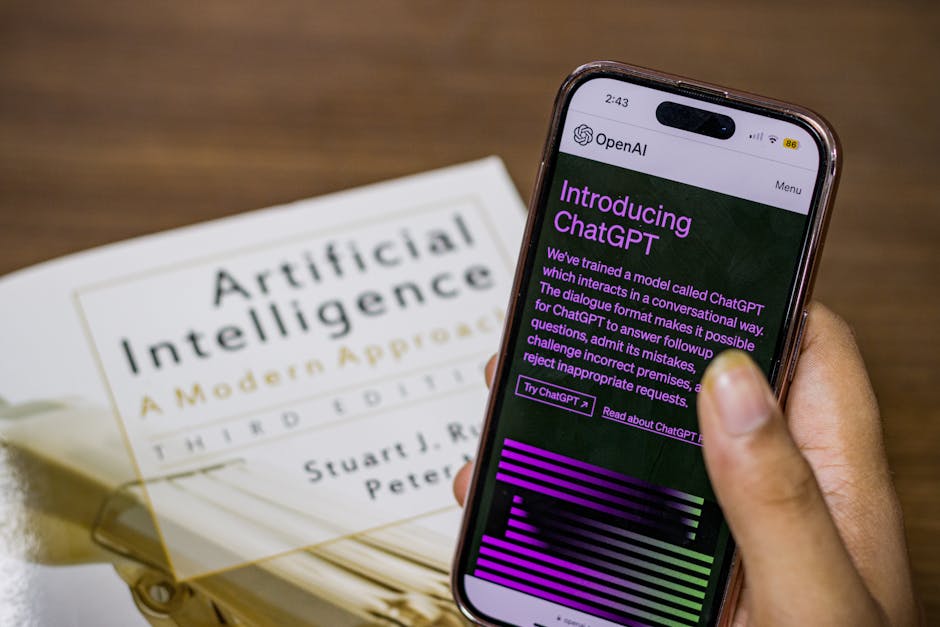
This guide covers everything you need to know about how to automate tasks with ai in 2026, including practical examples, step-by-step instructions, and actionable tips you can implement today.
The future of work isn't just about efficiency; it's about intelligent automation that frees you from the mundane. Imagine reclaiming hours each day, not by working harder, but by letting AI do the heavy lifting. 💡
By 2026, AI won't just be a novelty; it'll be your indispensable co-pilot. This post will unveil five game-changing AI hacks, complete with specific tools and real-world examples, that will help you automate tasks, boost productivity, and transform your workflow. Get ready to supercharge your day!
1. AI-Driven Content Ecosystem Management: From Idea to Multi-Channel Distribution
Creating compelling content consistently is a massive undertaking. In 2026, AI moves beyond simple article generation to managing your entire content ecosystem, adapting to different platforms and audience segments with unprecedented precision. This isn't just about writing; it's about strategic content deployment. 🚀
What it Automates:
- Idea Generation & Research: Identifying trending topics, keywords, and audience pain points.
- Multi-Format Content Creation: Generating blog posts, social media captions, email newsletters, and even podcast scripts from a single prompt.
- SEO Optimization: Ensuring content ranks high by automatically integrating relevant keywords, meta descriptions, and schema markup.
- Cross-Platform Adaptation & Scheduling: Reformatting and scheduling content for optimal engagement on LinkedIn, X (Twitter), Instagram, YouTube, and your blog.
Tools & How to Use Them (2026 Perspective):
- Advanced LLMs (e.g., ChatGPT-5, Google Gemini Ultra): These models will have vastly improved context windows and multimodal capabilities.
- Prompt for a Content Calendar: Start by prompting, "Generate a 30-day content calendar for a SaaS company targeting small businesses, focusing on lead generation. Include blog topics, social media themes, and email newsletter ideas, optimized for Q3 2026 trends."
- Generate Core Content: For a chosen topic, prompt, "Write a 1500-word SEO-optimized blog post on '[Topic]' targeting '[Keyword]' with a conversational tone. Include an introduction, 3-4 main sections, a conclusion, and a clear call to action."
- Integrated AI Marketing Suites (e.g., Jasper AI Pro, Copy.ai Enterprise with advanced integrations): These platforms are evolving to be complete content hubs.
- Repurpose with a Click: Once your blog post is ready, use the suite's 'Repurpose Content' feature. It will automatically generate 5-7 distinct social media posts (LinkedIn, X, Instagram Carousel captions), a summary email, and even a short video script, all tailored to each platform's best practices.
- Automated SEO Audit & Suggestion: Before publishing, the AI will perform a real-time SEO audit, suggesting headline tweaks, internal linking opportunities, and keyword density adjustments.
- Smart Scheduling Tools (e.g., Buffer AI, Hootsuite AI Assistant): These tools will learn your audience's peak engagement times and auto-schedule accordingly.
- Connect Your Accounts: Link all your social media profiles, blog, and email marketing platform.
- Approve & Distribute: Review the AI-generated content variations and scheduling suggestions. With one click, the AI distributes your content across all channels at optimal times.
Pro-Tip: Don't just accept AI output. Treat it as a highly capable first draft. Always add your unique brand voice and human touch for maximum impact. 🎯
2. Intelligent Digital Assistant & Workflow Orchestration: Your Proactive AI Co-pilot
Forget basic scheduling; in 2026, your AI assistant will be a true workflow orchestrator, anticipating your needs, managing communications, and executing multi-step tasks across disparate applications. Think less Siri, more highly skilled personal chief of staff. ⚡
What it Automates:
- Email Triage & Response: Prioritizing urgent emails, drafting comprehensive replies, and categorizing your inbox.
- Meeting Management: Scheduling, sending invites, preparing agendas based on previous discussions, and even joining meetings to take smart notes.
- Cross-Application Task Execution: Triggering actions in CRM, project management tools, and communication platforms based on conversational input or detected events.
- Proactive Information Retrieval: Fetching relevant documents, data, or contacts before you even ask for them, based on your current task or upcoming meetings.
Tools & How to Use Them (2026 Perspective):
- Microsoft Copilot (System-Wide Integration): By 2026, Copilot will be deeply embedded across Windows, Microsoft 365, and potentially even third-party apps, acting as a universal AI layer.
- Email Management: Open Outlook and prompt, "Copilot, prioritize my inbox for today, draft responses to all client inquiries regarding 'Project X' with a status update, and schedule follow-ups for emails marked 'Urgent' that aren't replied to within 2 hours."
- Meeting Prep: Before a meeting, prompt, "Copilot, summarize the key decisions from the last three meetings with 'Client Y', pull up their latest project status report, and suggest a meeting agenda focused on Q4 strategy."
- Custom GPTs & AI Agents (e.g., from OpenAI's marketplace, specialized platforms): These will be highly specialized AI assistants you can build or subscribe to for specific roles.
- Project Coordinator Agent: Train a custom GPT to monitor your project management tool (e.g., Asana, Jira). If a task is overdue, it could automatically send a gentle reminder to the assignee via Slack, update the project lead, and flag it in your daily digest.
- CRM Data Entry Agent: Set up an agent to monitor your incoming calls/emails. After a client interaction, it could prompt you with key questions, then automatically update contact records in Salesforce, log the interaction, and create follow-up tasks.
- Advanced Automation Platforms (e.g., Zapier with AI actions, Make.com): These platforms will feature more intuitive AI triggers and complex multi-step actions.
- Client Onboarding Workflow: When a new client signs a contract (detected via DocuSign), Zapier AI could automatically: create a new client folder in Google Drive, set up a project in your PM tool, send a personalized welcome email, and schedule an introductory meeting with your team.
Pro-Tip: Start small with one repetitive task, like email categorization. As you get comfortable, gradually expand the AI's responsibilities. It's about building trust in your digital co-pilot. ✅
3. AI for Data Storytelling & Predictive Insights: Beyond Spreadsheets
Data is everywhere, but extracting actionable insights is often time-consuming. In 2026, AI won't just analyze data; it will tell compelling stories with it, predict future trends, and suggest strategic moves, all in plain language. You'll spend less time digging and more time strategizing. 📊
What it Automates:
- Automated Report Generation: Transforming raw data into visually appealing charts, graphs, and executive summaries with natural language explanations.
- Anomaly Detection: Proactively identifying unusual patterns or significant deviations in performance (e.g., sudden sales drops, unexpected website traffic spikes).
- Predictive Analytics: Forecasting future trends, sales, or customer behavior based on historical data.
- Root Cause Analysis: Providing insights into *why* certain trends are occurring, not just *what* is happening.
Tools & How to Use Them (2026 Perspective):
- Business Intelligence Tools with AI Copilots (e.g., Power BI Copilot, Tableau with AI, Google Looker Studio Pro): These platforms are integrating powerful conversational AI.
- Natural Language Querying: Upload your sales data and simply ask, "Show me the top 5 revenue-generating products in Q3 and explain the key drivers behind their performance compared to last year." The AI will generate a dynamic report with charts and a written summary.
- Automated Dashboards: Prompt, "Create a real-time marketing performance dashboard focusing on ROI, lead conversion rate, and customer acquisition cost across all channels, updating hourly." The AI will build and maintain this dashboard for you.
- AI-Enhanced Spreadsheets (e.g., Google Sheets with AI functions, Excel with Copilot): Even familiar tools are getting an AI upgrade.
- Smart Data Cleaning & Analysis: Upload messy CSV files. Ask the AI, "Clean this dataset, remove duplicates, fill in missing values based on patterns, and identify any outliers in our customer churn data." It will suggest and execute these actions.
- Predictive Modeling: Highlight a column of historical sales data and ask, "Predict next quarter's sales based on this data, considering seasonality and recent market trends." The AI will provide a forecast and confidence intervals.
- Specialized AI Analytics Platforms (e.g., Pecan AI, DataRobot): For deeper, more complex predictive models.
- Customer Churn Prediction: Feed in customer behavior data. The platform will build a model to identify customers most likely to churn in the next 30 days, allowing for proactive retention efforts.
- Supply Chain Optimization: Analyze historical demand, supplier lead times, and logistical data to predict optimal inventory levels and identify potential bottlenecks before they occur.
Pro-Tip: Start with a clear question. The more specific your query, the more accurate and actionable the AI's insights will be. Always cross-reference critical AI-generated insights with human expertise. 💡
4. Automated Visual Asset Generation & Branding: Design at the Speed of Thought
Visuals are critical for engagement, but traditional design is often slow and expensive. By 2026, AI will be your on-demand design studio, generating high-quality images, videos, and branding elements from text prompts, making professional-grade visuals accessible to everyone. 🖼️
What it Automates:
- Image & Illustration Generation: Creating unique visuals for blogs, social media, presentations, and marketing materials from simple text descriptions.
- Video Clip Creation & Editing: Generating short promotional videos, explainer clips, or social media reels, including script, voiceover, and visual elements.
- Branding Consistency: Ensuring all generated visuals adhere to your brand guidelines (colors, fonts, style) automatically.
- Asset Repurposing & Resizing: Adapting a single visual asset for various platforms and dimensions instantly.
Tools & How to Use Them (2026 Perspective):
- Advanced Text-to-Image/Video Platforms (e.g., Midjourney V7+, DALL-E 4, Adobe Firefly 2.0+): These tools will offer unparalleled control and fidelity.
- Generate Blog Hero Images: Prompt, "Create a photorealistic image of a diverse team collaborating around a glowing AI interface in a modern, sunlit office. Focus on innovation and teamwork. Aspect ratio 16:9."
- Social Media Ad Creatives: Prompt, "Design 3 distinct Instagram carousel slides for a sustainable fashion brand, showcasing a new eco-friendly dress. Use earthy tones and natural light. Include text overlay 'Shop Eco-Chic Now!' on the last slide."
- Short Explainer Video: Use a tool like RunwayML's advanced version. Prompt, "Create a 30-second animated explainer video about 'The Benefits of Cloud Computing for Startups'. Include a friendly voiceover, engaging graphics, and a call to action to visit our website. Use a clean, minimalist style."
- AI-Powered Design Assistants (e.g., Canva AI Design Assistant, Glorify AI): These integrate generative AI into user-friendly design interfaces.
- Brand Kit Integration: Upload your brand guidelines (logos, colors, fonts). The AI will automatically apply these to any design you generate or edit.
- Smart Template Customization: Upload an image of a product and ask the AI, "Generate 5 variations of a product launch announcement poster using my brand kit, with different layouts and headlines."
- AI-Driven Asset Libraries (e.g., Stock photo/video sites with generative AI integration): Expect stock libraries to become hybrid, offering both curated and AI-generated assets.
- Find Specific Imagery: If you can't find the exact stock photo, describe it in detail, and the AI will generate it, often integrating it seamlessly into your project.
Pro-Tip: The quality of your visual output depends heavily on the specificity of your prompts. Experiment with descriptive keywords, styles, and artistic directions. Think like a director! 🎨
5. Smart Meeting & Communication Synthesis: Unlock Knowledge from Conversations
Meetings can be notorious time-sinks. In 2026, AI will transform meetings from ephemeral discussions into structured, actionable knowledge assets. It's about distilling the essence of every conversation, whether live or asynchronous. 🎙️
What it Automates:
- Real-time Transcription & Summarization: Transcribing meeting audio/video and generating concise summaries of key discussion points, decisions, and action items.
- Action Item & Task Generation: Automatically identifying who is responsible for what and by when, then integrating these directly into project management tools.
- Knowledge Base Integration: Extracting critical information from meetings and populating your company's internal knowledge base or CRM.
- Sentiment Analysis & Engagement Insights: Providing insights into meeting dynamics, participant engagement, and overall sentiment.
Tools & How to Use Them (2026 Perspective):
- AI Meeting Assistants (e.g., Otter.ai Pro, Fathom AI, Zoom AI Companion, Microsoft Teams Copilot): These tools will be standard for most professional communications.
- Automated Meeting Notes: During or after a meeting, the AI will provide a full transcript, a bulleted summary, identified action items with assigned owners, and key decisions made. You can then ask, "Summarize the client's concerns regarding the delivery timeline and list all proposed solutions."
- Follow-up Email Drafts: Based on the meeting summary, the AI can automatically draft a follow-up email to attendees, detailing action items and next steps, ready for your review.
- Integrated Communication & Project Management Platforms (e.g., Slack AI, Asana AI, Jira with AI enhancements): AI will seamlessly bridge these platforms.
- Slack Channel Summary: For a busy Slack channel, ask the AI, "Summarize the key discussions from the 'Product Development' channel in the last 24 hours, highlighting any blockers or urgent decisions."
- Task Creation from Discussion: If a discussion in Microsoft Teams or Slack concludes with, "Sarah will research Q4 marketing strategies by Friday," the AI can automatically create a task for Sarah in Asana or Jira with that deadline.
- AI-Powered Knowledge Management Systems (e.g., Notion AI, Coda AI): These platforms will automatically index and organize meeting insights.
- Searchable Knowledge Base: All summarized meeting notes and decisions are automatically added to your searchable knowledge base, making it easy to reference past discussions or decisions without sifting through recordings.
- Proactive Information Retrieval: If you're starting a new project, the AI can proactively suggest relevant past meeting summaries, documents, or expert contacts related to that topic.
Pro-Tip: Encourage your team to use AI meeting assistants consistently. The more data they process, the better they become at understanding your team's specific context and needs. 🎯
Conclusion: Your Automated Future Starts Now
The year 2026 isn't a distant dream; it's just around the corner, and the AI revolution is accelerating. These five AI hacks aren't just theoretical; they represent practical, actionable steps you can take to automate significant portions of your workday. By embracing these intelligent tools, you're not just saving time; you're elevating your role, focusing on strategic thinking, and unlocking unprecedented levels of productivity. 🚀
Actionable Next Steps:
- Pick One Hack to Start: Don't try to implement everything at once. Choose one hack that addresses a major pain point in your current workflow.
- Experiment with Beginner-Friendly Tools: Many AI tools offer free tiers or trials. Start with accessible options like Copilot features in Microsoft 365, Canva AI, or free versions of AI content generators.
- Define Your Automation Goals: Before you start, clearly identify what you want to automate and why. This will help you measure success and refine your prompts.
- Embrace Iteration: AI is powerful, but it's not perfect. You'll need to refine your prompts and workflows over time to get the best results.
- Stay Curious: The AI landscape is evolving rapidly. Continuously explore new tools and features to stay ahead of the curve.
The time to integrate artificial intelligence into your daily tasks is now. Start automating, start optimizing, and start experiencing the future of productivity today! ⚡
FAQ: Your AI Automation Questions Answered
Q1: Are these AI tools expensive, and are there free options for beginners?
A1: While many advanced AI tools have subscription tiers (which often unlock powerful features), most offer generous free trials or even robust free versions. For beginners, tools like ChatGPT (free tier), Canva's AI features, and basic Zapier AI automations are excellent entry points. Many browsers and operating systems are also integrating basic AI capabilities (e.g., Microsoft Copilot) at no additional cost for basic usage. The key is to start small and scale up as your needs and budget grow. ✅
Q2: How much technical skill do I need to implement these AI hacks?
A2: Surprisingly little! Most modern AI tools are designed with user-friendliness in mind, often featuring intuitive interfaces, drag-and-drop builders, and natural language prompts. You don't need to be a coder. If you can use a smartphone or navigate a website, you can leverage these AI tools. The learning curve is primarily about understanding how to phrase your requests (prompts) effectively to get the desired output. 💡
Q3: Is my data safe when using these AI automation tools?
A3: Data security is a critical concern, and reputable AI tool providers invest heavily in it. Look for tools that comply with industry standards (e.g., GDPR, CCPA, ISO 27001) and offer robust data encryption. Always read the terms of service and privacy policies, especially for sensitive information. For highly confidential data, consider using enterprise-grade solutions that offer on-premise deployment or enhanced data governance features. Never input highly sensitive personal or proprietary information into free, public AI models without understanding their data handling policies. 🎯
Q4: How can I ensure the AI's output is accurate and aligned with my brand?
A4: Think of AI as an incredibly fast and knowledgeable assistant, but one that still needs oversight. Always review, fact-check, and edit AI-generated content before publishing or acting on it. To align with your brand, you can 'train' AI tools by providing examples of your writing style, brand voice guidelines, and specific terminology. Consistency in your prompts and feedback to the AI will significantly improve its output quality and brand alignment over time. It's a collaborative process! 🤝
Q5: Won't AI automation replace human jobs?
A5: The historical pattern with new technologies is that they transform jobs rather than simply eliminating them. AI is excellent at automating repetitive, data-intensive, or creative-assistive tasks. This frees up human professionals to focus on higher-level strategic thinking, complex problem-solving, emotional intelligence-driven interactions, and areas where creativity and judgment are paramount. The goal is to augment human capabilities, making us more productive and allowing us to focus on the truly impactful work, rather than getting bogged down in mundane tasks. Learn to leverage AI, and you'll become more indispensable, not less. 🚀
Have you tried any of these AI tools? What's been your experience? Share your thoughts in the comments below - I'd love to hear what's working for you!
Related Topics: #AI #ArtificialIntelligence #AITools #Productivity #Automation #Technology #Tutorial #Guide #TechTips
Comments
Post a Comment