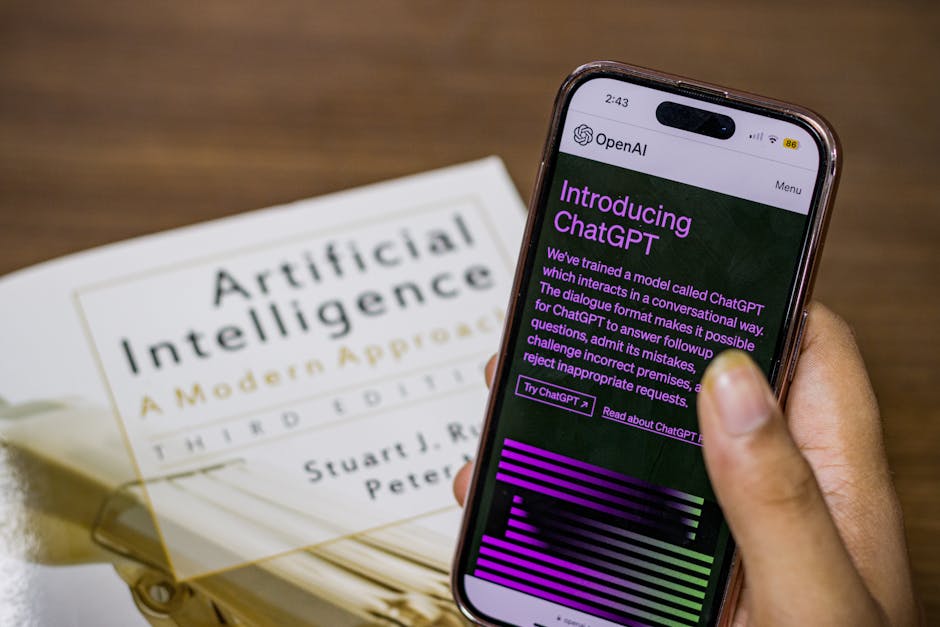
This guide covers everything you need to know about best ai chatbots to try in 2026, including practical examples, step-by-step instructions, and actionable tips you can implement today.
The future isn't just coming; it's already here, rapidly changing how we work, learn, and create. By 2026, AI chatbots won't just be a novelty but an indispensable part of our daily lives. This comprehensive guide will equip you with the knowledge to navigate the evolving landscape of artificial intelligence, highlighting the top 10 AI chatbots you should master to stay ahead.
Get ready to dive deep into the world of AI, exploring powerful tools that can boost your productivity, automate tedious tasks, and unlock new creative potential. We'll break down their unique strengths, ideal use cases, and how you can start leveraging them right now. 🚀
Understanding the AI Chatbot Revolution
AI chatbots have evolved far beyond simple question-and-answer systems. Today's advanced models can write code, generate marketing copy, analyze data, brainstorm complex ideas, and even offer empathetic conversations. They are powerful artificial intelligence tools designed to augment human capabilities, not replace them.
The pace of development is staggering. What's cutting-edge today might be standard tomorrow. That's why looking ahead to 2026 is crucial. We're not just picking the best of today, but forecasting which platforms will continue to innovate and deliver immense value in the near future. Mastering these tools now will give you a significant edge in any field. 💡
The 10 Best AI Chatbots for 2026 (Get Ahead Now!)
Here’s our curated list of the top AI chatbots that are poised to dominate the landscape in 2026. Each offers unique capabilities for different needs, from general productivity to highly specialized tasks. Let's explore!
-
ChatGPT by OpenAI
Why it's a 2026 Powerhouse: OpenAI continues to set the bar for general-purpose AI. ChatGPT, especially its paid versions (GPT-4 and beyond), will remain a leading force due to its multimodal capabilities (text, images, audio), extensive plugin ecosystem, and the ability to create custom GPTs. Its continuous learning and massive user base ensure it will stay at the forefront.
- Key Features:
- Advanced natural language understanding and generation.
- Multimodal inputs and outputs (text, image generation/analysis, voice).
- Custom GPTs for specialized tasks (e.g., coding assistant, content creator).
- Extensive plugin library for third-party integrations.
- Continual model improvements.
- Real-World Use Cases: Brainstorming ideas, writing articles, coding assistance, summarizing documents, language translation, creative writing, content planning, marketing strategy.
- Best For: Professionals, students, developers, content creators, marketers – essentially anyone looking for a versatile and powerful AI assistant.
- Practical Tip: Experiment with creating your own custom GPTs for tasks you do repeatedly. This can be a huge productivity booster.
- Key Features:
-
Gemini (formerly Bard) by Google
Why it's a 2026 Powerhouse: Google's Gemini is deeply integrated into the Google ecosystem, giving it a unique advantage. Its direct access to real-time information via Google Search, along with its native multimodal design, makes it incredibly powerful for research, planning, and interacting with various Google apps. As it evolves, its enterprise integration will also be key.
- Key Features:
- Real-time information access via Google Search.
- Native multimodal capabilities (understanding and generating text, images, audio, video).
- Deep integration with Google Workspace apps (Docs, Sheets, Gmail, Calendar).
- Advanced reasoning and coding capabilities.
- Multiple draft options for responses.
- Real-World Use Cases: Researching current events, planning trips, drafting emails in Gmail, summarizing meeting notes from Google Meet, data analysis in Google Sheets, generating image ideas.
- Best For: Anyone heavily invested in the Google ecosystem, researchers, planners, marketers, and general users who need up-to-date information.
- Practical Tip: Link Gemini to your Google Workspace and use it to draft emails, create event summaries, or even help you analyze data in Sheets. This is a game-changer for automation.
- Key Features:
-
Claude by Anthropic
Why it's a 2026 Powerhouse: Anthropic's Claude distinguishes itself with a strong focus on safety, ethics, and particularly long context windows. This means it can process and understand much larger amounts of text at once, making it ideal for in-depth analysis of lengthy documents, books, or extensive conversations. Its "Constitutional AI" approach ensures more helpful and harmless outputs.
- Key Features:
- Exceptionally long context window (processing power for massive texts).
- Strong ethical and safety guardrails ("Constitutional AI").
- Nuanced understanding and generation, particularly good for complex reasoning.
- Less prone to hallucination in certain contexts due to its design principles.
- Real-World Use Cases: Analyzing legal documents, summarizing academic papers, performing literary analysis, processing extensive customer feedback, in-depth research, content moderation.
- Best For: Researchers, lawyers, academics, content analysts, writers, and anyone dealing with large volumes of text.
- Practical Tip: Upload entire books or research papers to Claude and ask it to summarize key themes, extract specific data points, or compare arguments. It excels at handling large inputs.
- Key Features:
-
Microsoft Copilot
Why it's a 2026 Powerhouse: Microsoft Copilot isn't just a chatbot; it's an AI assistant deeply embedded across the entire Microsoft ecosystem, from Windows to Microsoft 365 applications like Word, Excel, PowerPoint, and Outlook. Its seamless integration makes it an unparalleled productivity tool for business and personal users.
- Key Features:
- Deep integration with Microsoft 365 apps and Windows OS.
- Generative AI capabilities for document creation, data analysis, and presentations.
- Contextual understanding of your files and ongoing work.
- Natural language interaction for complex tasks.
- Real-World Use Cases: Drafting documents in Word, generating PowerPoint presentations from outlines, analyzing data in Excel, summarizing email threads in Outlook, managing files in Windows, getting quick answers directly from your desktop.
- Best For: Business professionals, students, researchers, and anyone heavily reliant on Microsoft's suite of products.
- Practical Tip: Use Copilot in Word to kickstart a draft or in Excel to quickly analyze a dataset. Its contextual awareness of your open documents is a massive time-saver for automation.
- Key Features:
-
Perplexity AI
Why it's a 2026 Powerhouse: Perplexity AI stands out as a "conversational answer engine." Unlike traditional chatbots that might occasionally hallucinate or invent sources, Perplexity focuses on providing accurate, cited answers from across the web. Its ability to generate follow-up questions and conduct structured research will make it indispensable for fact-checking and deep dives.
- Key Features:
- Provides sourced answers with citations directly from web pages.
- Generates follow-up questions to refine your search.
- "Co-pilot" mode for guided research.
- Focus mode for specific domains (e.g., academic, Wolfram Alpha).
- Clean, user-friendly interface.
- Real-World Use Cases: Academic research, fact-checking, staying updated on niche topics, learning new subjects, gathering competitive intelligence, creating bibliographies.
- Best For: Students, researchers, journalists, writers, anyone needing reliable, sourced information quickly.
- Practical Tip: Use Perplexity to quickly get up to speed on a new topic or to verify information you find elsewhere. Its citations are invaluable for maintaining accuracy.
- Key Features:
-
Poe by Quora
Why it's a 2026 Powerhouse: Poe offers a unique aggregation platform, allowing users to access and compare multiple AI models (like GPT-4, Claude, Gemini, Llama, etc.) from a single interface. Its ability to create custom bots and its growing community features position it as a hub for AI exploration and development.
- Key Features:
- Access to multiple leading AI models in one place.
- Ability to create and share custom bots (fine-tuned for specific tasks).
- Community features for discovering and collaborating on bots.
- Often provides early access to new or experimental models.
- Real-World Use Cases: Comparing responses from different AI models, creating a personalized writing assistant, building a customer service bot, experimenting with various AI personalities.
- Best For: AI enthusiasts, developers, content creators, and users who want flexibility and access to a diverse range of models.
- Practical Tip: Use Poe to pit different models against each other for a given prompt to see which performs best for your specific needs. It's a great playground for beginner-friendly AI exploration.
- Key Features:
-
Pi.ai by Inflection AI
Why it's a 2026 Powerhouse: Pi.ai, short for "personal intelligence," focuses on being an empathetic, supportive, and conversational AI companion. While other chatbots prioritize information or task completion, Pi excels at natural dialogue, emotional intelligence, and personalized interaction. This focus on human-like conversation will make it invaluable for personal well-being and informal learning.
- Key Features:
- Highly conversational and empathetic tone.
- Focus on personal well-being and supportive dialogue.
- Remembers past conversations for more personalized interactions.
- Excellent for brainstorming, reflection, and learning in a casual way.
- Available on multiple platforms (web, mobile, WhatsApp).
- Real-World Use Cases: Personal brainstorming, journaling, practicing new languages, emotional support, discussing ideas, getting quick explanations for complex topics in a friendly manner.
- Best For: Individuals seeking a supportive conversational partner, those looking for a non-judgmental space to explore ideas, or anyone wanting a more human-like AI interaction.
- Practical Tip: Treat Pi like a friendly tutor or sounding board. Use it to talk through a problem, brainstorm creative solutions, or simply learn about something new in a low-pressure environment.
- Key Features:
-
Character.AI
Why it's a 2026 Powerhouse: Character.AI taps into the growing desire for personalized and entertaining AI interactions. It allows users to create and interact with AI characters based on fictional personalities, historical figures, or even custom personas. Its advanced conversational AI makes these interactions remarkably engaging and realistic, pushing the boundaries of what AI can be for entertainment and role-playing.
- Key Features:
- Create and interact with highly customizable AI characters.
- Advanced conversational AI for engaging role-play.
- Strong community for sharing and discovering characters.
- Great for creative writing, storytelling, and imaginative play.
- Real-World Use Cases: Creative writing prompts, role-playing scenarios, language practice with a "native speaker" character, historical simulations, developing storytelling skills, pure entertainment.
- Best For: Writers, role-players, language learners, anyone looking for creative inspiration or simply engaging entertainment.
- Practical Tip: If you're a writer, use Character.AI to interact with your fictional characters to deepen their personalities and dialogue. It's a unique tool for creative exploration.
- Key Features:
-
YouChat by You.com
Why it's a 2026 Powerhouse: YouChat integrates a conversational AI directly into a search engine experience, offering a powerful blend of information retrieval and AI-driven insights. It provides summarized answers with sources, much like Perplexity, but within a broader, customizable search portal. Its focus on user privacy and choice will continue to attract users looking for an alternative search experience.
- Key Features:
- AI chatbot integrated into a search engine.
- Summarized answers with relevant sources.
- Customizable search experience with "apps" for various data types.
- Strong emphasis on user privacy.
- Generative AI capabilities for writing, coding, and brainstorming.
- Real-World Use Cases: Quick factual lookups, research with summarized answers, coding assistance integrated into search, content generation while researching a topic, discovering new information efficiently.
- Best For: Users who want a unified search and AI experience, researchers, developers, and those prioritizing privacy in their online interactions.
- Practical Tip: Use YouChat when you need both a quick, summarized answer and the ability to dive deeper into search results, all from one interface. It's a great time-saving tool.
- Key Features:
-
Jasper Chat (or similar specialized content AI)
Why it's a 2026 Powerhouse: While many general AI chatbots can write, specialized AI platforms like Jasper (which includes Jasper Chat) are purpose-built for content creation and marketing teams. They offer advanced features specifically tailored for generating high-quality blog posts, marketing copy, social media content, and more, often with brand voice consistency and SEO optimization in mind. These will become indispensable for businesses in 2026.
- Key Features:
- Specialized templates for various content types (blog posts, ads, emails).
- Brand voice and style guides integration.
- SEO optimization features.
- Collaborative workspaces for teams.
- Plagiarism checker and grammar tools.
- Real-World Use Cases: Generating blog post outlines, writing ad copy, drafting social media updates, creating email marketing campaigns, rewriting content for different audiences, developing product descriptions.
- Best For: Marketers, content writers, social media managers, agencies, and businesses looking to scale their content production.
- Practical Tip: Don't just ask Jasper to write; train it on your brand's style guide and use its templates. This ensures consistent, high-quality content that truly reflects your brand. It's an essential automation tool for content teams.
- Key Features:
How to Choose the Right AI Chatbot for You
With so many powerful options, selecting the perfect AI chatbot can feel daunting. Here’s a quick guide to help you decide:
- Identify Your Primary Need: Are you looking for a general assistant (ChatGPT, Gemini), a research tool (Perplexity, YouChat), a creative partner (Character.AI, Jasper), or a personal confidante (Pi.ai)?
- Consider Your Ecosystem: If you're deep into Google Workspace, Gemini makes sense. For Microsoft users, Copilot is a no-brainer.
- Budget: Many offer free tiers with limitations, while premium versions unlock full power. Start free, then upgrade if the value is there.
- Learning Curve: Most are quite beginner-friendly, but some specialized tools might require a bit more exploration. Don't be afraid to experiment!
- Ethical Considerations: If safety and ethics are paramount for your use case (e.g., sensitive data), consider models like Claude.
Maximizing Your AI Chatbot Experience: Practical Tips
Simply having access to these tools isn't enough; knowing how to use them effectively is key. Here are some pro tips:
- Be Specific with Prompts: The clearer your instructions, the better the output. Include desired format, length, tone, and audience.
- Iterate and Refine: Don't settle for the first answer. Ask follow-up questions, request revisions, and guide the AI to your desired outcome.
- Fact-Check Always: Even the best AIs can sometimes "hallucinate." Always verify critical information, especially for research or professional use.
- Experiment Constantly: Play around with different prompts and chatbots. You'll discover unexpected capabilities and new workflows.
- Learn Prompt Engineering: Understanding how to craft effective prompts is a crucial skill for 2026. Resources are widely available online.
- Combine Tools: Use one AI for brainstorming, another for drafting, and a third for editing. They often complement each other beautifully.
Conclusion: Your Future with AI Starts Now!
The landscape of AI chatbots in 2026 will be dynamic, innovative, and deeply integrated into our lives. By understanding and actively engaging with these top 10 platforms, you're not just adopting new tools; you're future-proofing your skills and dramatically enhancing your productivity.
Don't wait for 2026 to catch up. Choose one or two of these chatbots that align with your immediate needs, sign up for their free tiers, and start experimenting today. The sooner you begin, the more comfortable and proficient you'll become, unlocking a world of potential for personal and professional growth. 🎯 The time to get ahead is now!
FAQ: Common Questions About AI Chatbots
Q1: Are these AI chatbots truly free to use?
Many AI chatbots, including most on this list, offer a free tier with limited usage or features. For advanced capabilities, higher usage limits, or access to the latest models (like GPT-4), a paid subscription is usually required. It's a great way to try them out before committing!
Q2: How can a beginner get started with AI chatbots?
Starting is easy! Choose a general-purpose, beginner-friendly chatbot like ChatGPT or Gemini. Begin with simple prompts like "Write a short poem about a cat" or "Explain quantum physics in simple terms." Gradually move to more complex requests and experiment with different tones and styles. The key is to just start playing around!
Q3: Can AI chatbots replace human jobs?
While AI chatbots can automate many repetitive and analytical tasks, they are primarily designed to augment human capabilities, not replace them. They handle data, generate drafts, and assist in decision-making, allowing humans to focus on higher-level creativity, critical thinking, emotional intelligence, and complex problem-solving. Think of them as powerful co-pilots. ⚡
Q4: How do I ensure privacy when using these AI tools?
Privacy is a crucial concern. Always be mindful of the information you share. Avoid inputting highly sensitive personal or proprietary company data unless you are using an enterprise-grade solution with strict data handling agreements. Read the privacy policies of each AI service you use. Some models, like YouChat, emphasize user privacy more explicitly.
Q5: What's the difference between a general-purpose AI chatbot and a specialized one?
A general-purpose AI chatbot (like ChatGPT or Gemini) is designed to handle a wide array of tasks and topics, from creative writing to coding, with broad knowledge. A specialized chatbot (like Jasper Chat for content creation or Character.AI for entertainment) is fine-tuned for a specific domain, offering deeper features and expertise within that niche. Depending on your needs, both can be incredibly useful tools.
Have you tried any of these AI tools? What's been your experience? Share your thoughts in the comments below - I'd love to hear what's working for you!
Related Topics: #AI #ArtificialIntelligence #AITools #Productivity #Automation #Technology #Tutorial #Guide #TechTips
Comments
Post a Comment